

Planning for the end of life is never an easy conversation, but it becomes necessary with time. Families in Illinois often look for peace of mind rather than complex paperwork or unexpected medical bills. A Burial Policy for Seniors helps cover funeral and final expenses, giving loved ones emotional space instead of financial stress. Many seniors in Illinois prefer to secure a simple policy that guarantees funds for their funeral, burial, or cremation, so their family doesn’t have to struggle when the moment arrives. That’s where smart decision-making matters. Insurance Centrik focuses on providing clear information, not selling services, so you can make better decisions confidently and calmly.
Why Burial Insurance Matters More with Age
The cost of a funeral in Illinois can start from $6,500 and run well beyond $12,000, depending on personal choices and religious customs. When someone passes away without arrangements in place, their family often ends up paying immediately, leaving them overwhelmed and emotionally unprepared. That’s why many seniors start planning early. Burial insurance doesn’t erase the emotional pain, but it does remove stress from those left behind.
What makes burial insurance different is its purpose. It doesn’t try to build wealth for retirement or offer investments, it simply protects family members from sudden financial pressure. Instead of scrambling for money, a policy ensures funds are available the moment they are needed. A small act of planning today becomes a big act of care tomorrow.
Many seniors choose prepaid funeral plans but these plans sometimes include hidden rules and less freedom. With burial insurance the family gets full control. There is no fixed agreement that limits their choices. That is why burial policy is often a better and more flexible option for families.
How Illinois Seniors Can Protect Their Future
Cost of living, medical bills, and housing expenses in Illinois continue to rise, leaving little room for sudden obligations. Seniors aged 60–85 often worry about two things:
1. Will my family struggle financially after I’m gone?
2. Will my medical history prevent me from getting approved?
This is why burial insurance is often chosen over traditional life insurance. It’s easier to qualify for, approvals are faster, and coverage is offered even when someone has health complications. Many companies offer guaranteed acceptance plans, meaning no medical exams are needed. However, it’s important to understand if there is a waiting period before full coverage applies.
Illinois residents are increasingly becoming aware of the importance of leaving behind proper arrangements. Some seniors don’t tell their children about their plans; instead, they quietly secure a policy to ensure dignity at the end of life. Others openly involve their families, making it a shared decision. Both approaches are valid, but communication always helps avoid confusion later.
What Burial Insurance Generally Covers
Burial insurance is structured for final expenses only. The payout is usually a small to moderate amount—just enough to cover funeral expenses, burial or cremation costs, and sometimes unpaid medical bills. Costs may include:
- funeral home fees
- memorial service arrangements
- burial plot or cremation expenses
- casket or urn
- transportation
- unpaid hospital or hospice bills
- legal documents such as death certificates
The coverage amount usually ranges from $5,000 to $30,000, depending on age and health conditions. Some policies offer higher amounts, but most seniors choose just enough to cover their final needs rather than leaving excessive insurance value. It keeps monthly premiums low and affordable.
Burial Insurance vs Life Insurance
Many people think that life insurance will automatically cover funeral costs, but that isn’t always true. When comparing Burial Insurance vs Life Insurance, life insurance can take time to release money, and the process can be complicated before your family receives the benefit.
Burial insurance, on the other hand, is specifically designed to cover final expenses like funeral and burial costs. It usually pays out faster and is easier for families to use when needed. Unlike regular life insurance, burial insurance often has simpler approval requirements, making it a good choice for seniors who want quick and reliable coverage. Here’s how the two differ in practical use:
| Burial Insurance | Life Insurance |
| Focused on funeral and burial costs only | Designed for income replacement or inheritance |
| Easier approval, often with no medical exam | May require full medical check-ups |
| Faster payout | Generally has higher premiums |
| Affordable monthly cost | Slower payout process |
Seniors who already have life insurance might still choose burial insurance because it ensures immediate support for funeral costs without affecting inheritance plans.
How Premiums Are Calculated
Burial insurance rates in Illinois depend on several factors—age, smoking habits, existing health issues, gender, and coverage amount. Here’s how each affects pricing:
Age – The older the applicant, the higher the premium. Insurance companies take a calculated risk based on life expectancy.
Health – If someone has high-risk conditions (such as heart disease or cancer), they may receive slightly higher premiums or a graded benefit plan.
Smoking – Smokers always face higher rates. If someone stops smoking for 12 months, they may qualify for non-smoker rates.
Coverage Amount – Higher coverage means higher premium, but some companies offer discounts when choosing a slightly higher amount.
Payment Method – Some insurers provide a lower premium when payments are made through automatic bank transfer instead of monthly invoices.
Smart seniors often compare multiple quotes before deciding. Even a difference of $8–$12 per month can matter over 5–10 years.
Average Burial Insurance Cost in Illinois
Estimated Monthly Sample Costs:-
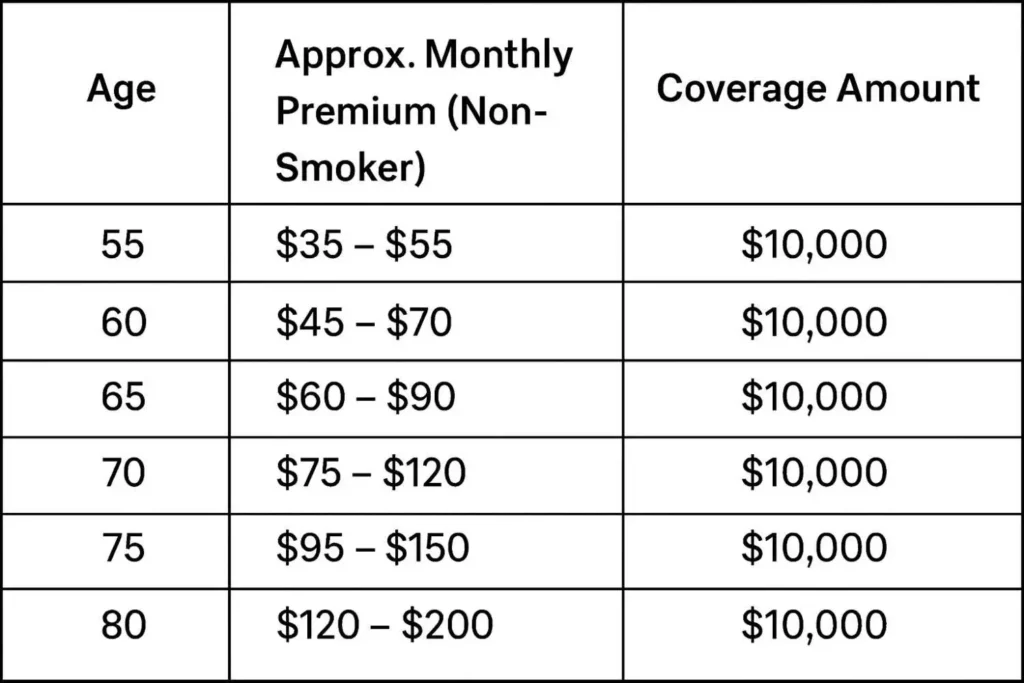
Note:- Smokers or applicants with heart issues may pay more. Locking rates early is a smart decision to keep costs stable for lifelong coverage.
Different Types of Burial Insurance in Illinois
Although burial insurance is simple by nature, policies come in a few types. These forms allow applicants with different medical histories to still qualify.
1. Simplified Issue Insurance
This type asks only basic health questions. There are no medical tests. If the answers are acceptable, approval may come within days.
2. Guaranteed Issue Insurance
This accepts all applicants, no questions at all. However, it usually includes a two-year waiting period before the full benefit applies. If the insured passes away during that time, the premium amount may be returned with interest instead of the full benefit.
3. Pre-Need Funeral Insurance
This connects directly with a funeral home. It may lock in today’s prices but can limit choices later. Some families prefer more flexible plans instead.
A policy type should match health condition, budget, and personal preference. Seniors with medical history often choose guaranteed issue plans, while others go for simplified issue policies to avoid waiting periods.
Best Time to Get Burial Insurance
There’s an assumption that burial insurance is something to buy after age 75, but the truth is very different. The best time to consider it is between age 50 and 70, when premiums are still affordable. Starting early brings several advantages:
- lower monthly premium
- full coverage without delay
- easier medical acceptance
- financial security for family
Planning ahead is not being pessimistic—it is being responsible. Many Illinois seniors start thinking about burial insurance after seeing family or friends struggle during emotional times.
Common Misunderstandings for Burial Insurance
Many people misunderstand burial insurance. Some believe they are too old to qualify. Some think it requires medical exams. Others think monthly premiums are high. The truth is much simpler:
- age is not a barrier — many insurers accept applicants up to 85
- medical exams are often not required
- policies can start as low as $35–$50 per month
- coverage can begin immediately depending on the plan
Seniors often feel relieved after discovering these facts. Information brings courage, and courage leads to better choices.
Things to Watch for Before Purchase
A few points should be checked before finalizing any policy:
- read the waiting period terms carefully
- check if accidental death is covered fully
- confirm if the premium stays the same or increases each year
- verify whether cash value is included
- understand how quickly the claim will be paid
It’s always better to discuss wishes with one trusted family member. When those decisions are known in advance, there is no confusion or stress later.
Smart Policy Amount Recommendation for Seniors
The right coverage amount depends on lifestyle, funeral preference, and family situation.
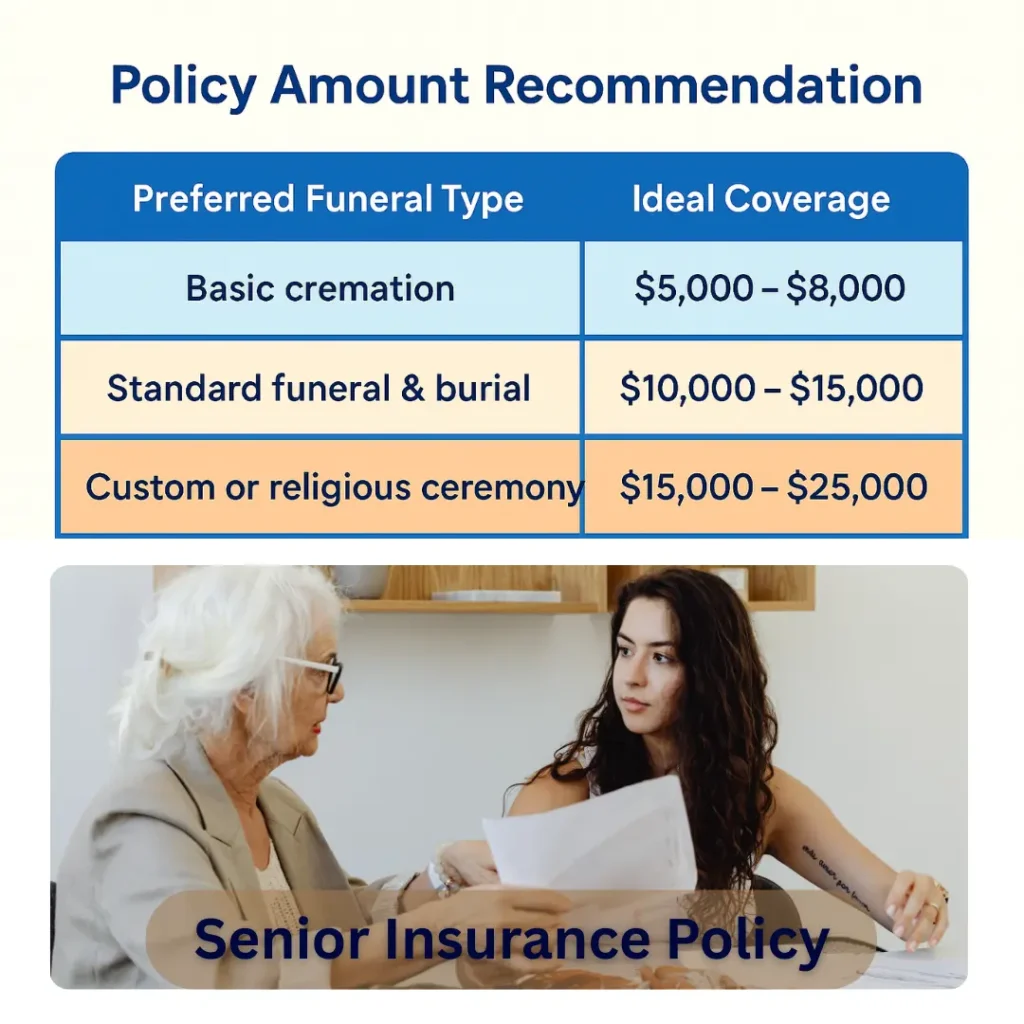
A small amount may work for some, but others choose more complete coverage to include memorial services, flowers, obituary announcements, and transportation.
Why Seniors Compare Travel Insurance and Burial Insurance Plans
While burial insurance handles the final stage of life, many seniors also pay attention to travel insurance benefits when visiting relatives or medical treatment locations outside their city.
Some benefits include:
- emergency medical coverage while traveling
- replacement of lost baggage
- reimbursement for trip cancellation
- support if hospitalized during travel
The reason this comparison matters is simple. Both travel insurance and burial insurance share one goal, protecting families from sudden financial burden. Seniors who travel often realize that insurance is not just paperwork; it is emotional protection for loved ones.
Why Talking About This Should Not Be Delayed
Planning for death is uncomfortable, but ignoring it doesn’t stop it. Children often believe their parents will live much longer, but reality may not always go as expected. When families talk openly, unpleasant surprises can be prevented. Some seniors write personal letters explaining their wishes and keep them alongside insurance documents. That simple act provides clarity during painful times.
Important Steps Every Senior Needs to Follow
If someone in Illinois wants to start the process, a logical approach helps:
- Estimate expected funeral cost and choose a target coverage amount.
- Decide if a simplified issue policy or guaranteed issue policy suits your medical situation.
- Compare quotes from three to five insurers.
- Read benefit terms, especially waiting period conditions.
- Inform at least one trusted person so they know where the policy document is placed.
This approach keeps everything smooth and respectful. Seniors deserve dignity at every stage of life—including the final one.
Emotional Value of Burial Insurance
Beyond money, there is emotional meaning. When a mother or father plans ahead, their children feel cared for. The message is simple: I do not want you to worry about anything when I’m gone. That final act can create peace and comfort. Many families later say that their grief was easier to handle because everything was already arranged.
Burial insurance does not bring happiness, but it prevents unnecessary pain.
Beneficiaries Should Be Clearly Selected
A policy has no value if no one knows about it. Seniors should:
- choose a trusted beneficiary
- inform them about the policy location
- mention preferred funeral style
- keep contact details of insurer ready
Some seniors also appoint a secondary beneficiary just in case. That keeps everything secure in uncertain situations.
Who Should Especially Consider Burial Insurance
It becomes highly meaningful for:
- single seniors living alone
- older adults without children
- families with previous medical expenses
- retirees living on limited income
- people who prefer cremation instead of burial
- seniors who want control over final choices
Such individuals often find peace after choosing a policy. They feel free — protecting others from future pressure.
Avoiding Scams and Confusing Offers
When seeking quotes, some companies use aggressive tactics. They promise extremely low premiums but raise costs later. Others push prepaid funeral packages that limit choices. Seniors should carefully compare terms, ask for everything in writing, and wait before signing anything.
Transparency is the most important factor. If an insurer avoids answering direct questions, it’s better to look elsewhere.
The Role of State Regulations in Illinois
Insurance regulations protect consumers. Illinois requires clear disclosure of terms and prohibits hidden charges. Applicants have the right to ask for:
- policy benefit structure
- renewal terms
- cancellation rules
- full schedule of premium payments
If these documents are not provided properly, filing a formal complaint is possible. Seniors should feel empowered, not pressured.
Real-Life Experience From Illinois Families
Many families have shared stories of relief after a burial insurance policy paid out quickly. One case involved a woman whose husband passed away unexpectedly. With burial insurance in place, she didn’t have to borrow money or sell belongings. The funeral was peaceful, respectful, and in accordance with his wishes. She later said the policy was the final gift her husband gave her.
Another family struggled because they had no burial arrangement. It took them weeks to arrange money, sign forms, and select funeral services. Their emotional pain was deeply affected by the financial pressure. These stories remind us of the importance of planning before it’s too late.
How Burial Insurance Approval Usually Works
Applications often take less than 30 minutes. After that:
- approval may come within 24–72 hours
- coverage may start immediately or after a waiting period
- beneficiary details are confirmed
- first payment begins next month
Unlike complex insurance plans, burial insurance is kept simple. Seniors don’t need to feel intimidated by paperwork. It’s not about investment strategies—it’s about peace at the end of life.
How Insurance Centrik Helps With Burial Insurance Information
Insurance Centrik does not sell burial insurance. The goal is to provide clarity so that every senior can make choices confidently and calmly. Insurance should never be bought under pressure. It should be selected with logic, understanding, and trust. When proper knowledge reaches families, they make decisions that reflect love rather than panic.
Prepare These Important Documents to Support Your Family
A simple document folder can make everything easier. Seniors may include:
- insurance policy copy
- contact details of insurer
- personal funeral wishes
- preferred cemetery or cremation choice
- written messages for family (optional)
This reduces confusion and supports healing.
Smart Planning Tips for Seniors in Illinois Today
We all know that planning for the future is important, especially for seniors in Illinois. When it comes to health and money matters the best insurance can bring peace of mind and protect the family from sudden costs. Whether someone needs burial insurance, health insurance or long term care it is important to understand every option clearly. Seniors should choose a plan that fits their budget and still gives the right coverage. Making smart choices today can make life easier and safer for tomorrow.
It’s also important for Illinois seniors to stay informed about changes in insurance rules, costs, and benefits. Local factors, such as the cost of living and healthcare options in Illinois, can affect which policies are best for you. Seniors should consider speaking with trusted advisors or insurance professionals who specialize in senior plans. These experts can help explain terms in simple language, highlight the best coverage options, and make sure there are no surprises later. In the end, having the right plan means seniors can enjoy their retirement years with confidence, knowing they are protected. Planning carefully today can make life easier tomorrow, reduce financial stress, and ensure that both you and your family are supported in every way.
FAQs
Does burial insurance cover cremation?
Yes. It covers both burial and cremation expenses, including urns and memorial services.
Is burial insurance the same as life insurance?
No. Burial insurance is simpler and meant only for final expenses. Life insurance is usually larger and meant for income replacement or inheritance.
Can I choose my funeral preferences in advance?
Yes, You can write your wishes and keep them with your policy so your family knows what you want.
Can someone with health problems still qualify?
Yes. Guaranteed acceptance policies are made for people with medical issues, although some may include a waiting period.

Aarvith is the author and founder of Insurance Centrik. He researches various insurance topics, including auto, health, travel, home, and business insurance. He provides accurate insurance information from reliable sources and industry expertise.