
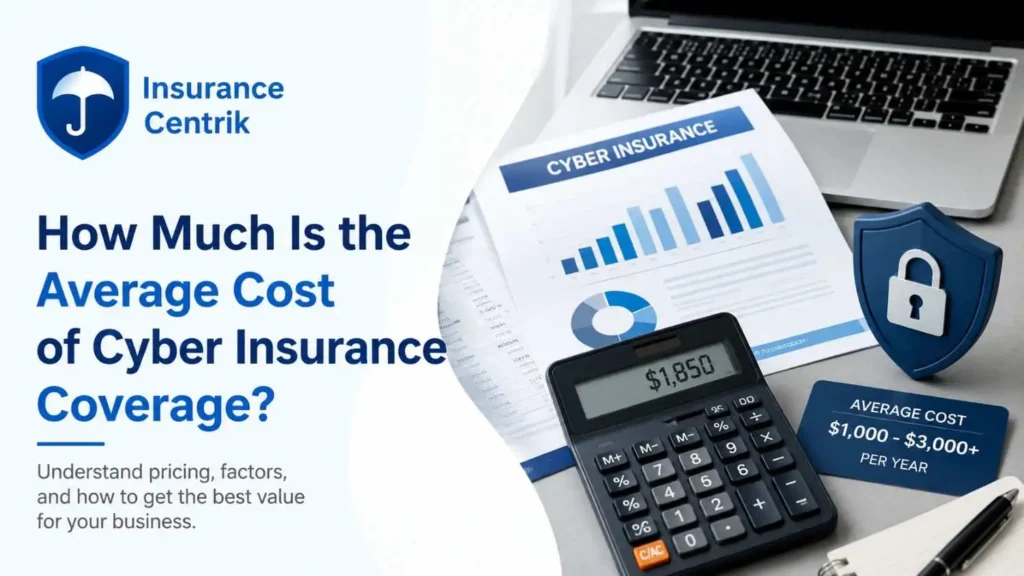
There are many types of cybercrime today ranging from ransomware to phishing, payments fraud, and various data breaches. Businesses across all sizes and industries can be affected by these cybercrimes, even if it is about paying the ransom money. Many business owners thus have the same questions in their mind: How much does cyber insurance cost?
A company’s insurance policy premium depends on several things, such as the size of the business, its annual revenues, the type of business, limits of coverage, and cybersecurity practices. The average cost of cyber insurance policy will typically range from $1,200 to $3,500 annually for a small firm but may be a lot higher for other organizations.
Cyber insurance policies help businesses compensate for financial losses resulting from cyber incidents. Cyber insurance provides coverage for such losses as legal fees, data recovery fees, data breach notification obligations, loss of income from business interruptions, ransomware expenses, and regulatory fines.
As the frequency of cyber incidents increases, the importance of purchasing a good cyber insurance policy becomes obvious since a business cannot afford losing all their revenues and data.
Why Cyber Insurance Has Become Essential for Businesses
Many business owners believe hackers only target large corporations. That assumption is dangerous. Small and medium-sized businesses are now one of the biggest targets because they often have weaker cybersecurity systems.
A cyberattack can shut down operations for days or weeks. Customer trust can disappear overnight after a data breach. Legal penalties and recovery costs can become overwhelming without insurance support.
What Does Cyber Insurance Cover?
Most cyber insurance policies provide protection for:
First-Party Coverage
This protects the business directly and may include:
- Data recovery expenses
- Business interruption losses
- Cyber extortion payments
- Incident response services
- Digital forensic investigations
Third-Party Coverage
This protects against claims made by customers or third parties and may include:
- Legal defense costs
- Privacy liability claims
- Regulatory investigations
- Customer settlements
- Notification expenses
The exact coverage varies by insurer, but these protections form the foundation of most cyber liability policies.
Average Cost of Cyber Insurance by Business & Industry Size
The cost of cyber insurance varies heavily based on company size and risk exposure. Smaller businesses usually pay less because they have fewer employees and smaller customer databases. Larger organizations require broader coverage limits and higher protection levels.
Cyber Insurance Cost Chart by Business Size
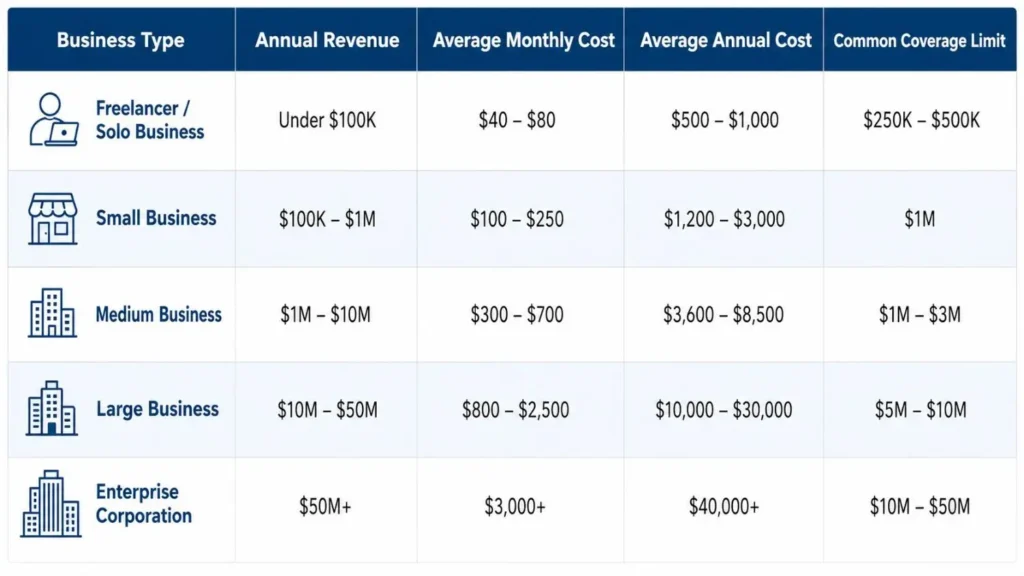
These figures are estimated averages based on business risk categories, policy structures, and insurer pricing models.
Average Cyber Insurance Costs by Industry
Some industries pay significantly higher premiums because cybercriminals target them more aggressively.
Industry-Based Cyber Insurance Pricing Table
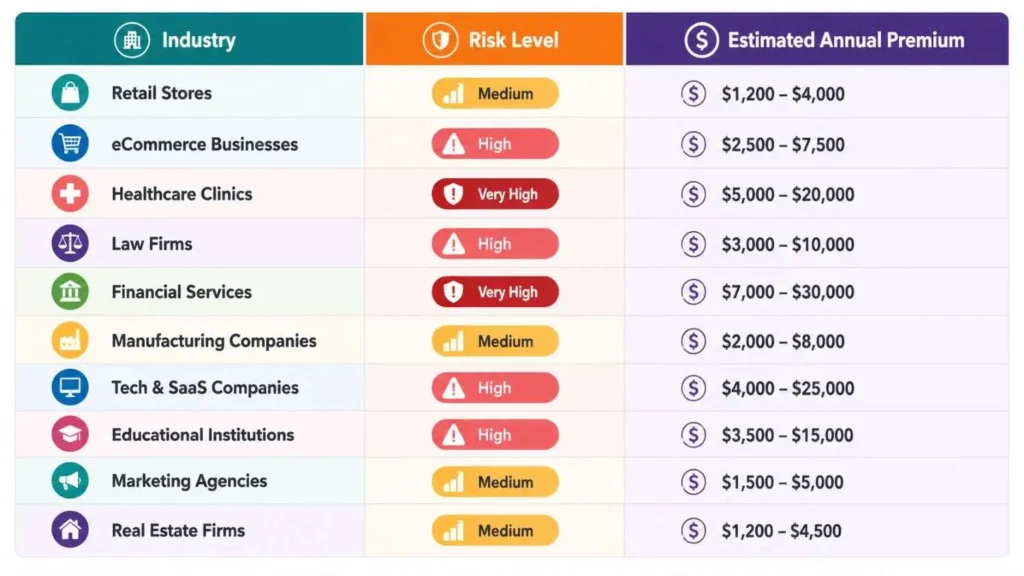
Healthcare and financial organizations often pay the highest premiums because they store medical records, banking details, and sensitive customer information.
Factors That Affect the Average Cost of Cyber Insurance
Insurance companies evaluate multiple risk elements before calculating premiums.
1. Business Revenue
Businesses with higher revenue usually pay more because larger operations face bigger financial losses after cyber incidents.
For example:
- A small online store earning $150,000 annually may pay around $1,500 yearly.
- A SaaS company generating $15 million annually may pay over $20,000 yearly.
2. Amount of Customer Data Stored
Businesses storing large amounts of customer information face higher risks.
This includes:
- Credit card details
- Social Security numbers
- Medical records
- Employee payroll information
- Banking details
- Login credentials
The more sensitive data a company stores, the higher the premium.
3. Industry Risk
Certain industries attract cybercriminals more frequently. Healthcare and finance experience some of the highest ransomware attack rates globally.
Insurance providers charge more for industries with:
- High-value customer data
- Strict compliance regulations
- Large transaction volumes
- Frequent cyberattack history
4. Security Infrastructure
Companies with stronger cybersecurity systems often receive lower premiums.
Important security practices include:
- Multi-factor authentication
- Endpoint protection software
- Employee cybersecurity training
- Encrypted databases
- Secure cloud backups
- Regular software updates
- Firewall monitoring
- Incident response planning
Businesses lacking these protections may pay significantly more.
5. Claims History
Businesses with previous cyber insurance claims are considered higher risk.
If a company has experienced:
- Ransomware attacks
- Data breaches
- Phishing scams
- Financial fraud incidents
the insurer may increase future premiums.
6. Coverage Limits
Higher coverage limits naturally increase policy costs.
Example:
| Coverage Limit | Estimated Annual Cost |
| $250,000 | $500 – $1,200 |
| $500,000 | $900 – $2,500 |
| $1 Million | $1,500 – $5,000 |
| $5 Million | $8,000 – $25,000 |
| $10 Million | $20,000+ |
Cyberattack Cost Examples Every Business Should Know
Many business owners underestimate how expensive cyberattacks can become.
Example 1: Small Retail Business
A small online clothing store experienced a ransomware attack that locked customer order systems for four days.
Expenses included:
- Data recovery: $12,000
- Lost revenue: $18,000
- IT investigation: $9,000
- Customer notifications: $4,000
Total Loss:
$43,000
Cyber insurance covered most of the expenses after the deductible.
Example 2: Healthcare Clinic Data Breach
A healthcare clinic suffered a breach involving patient medical records.
Expenses included:
- Legal defense: $85,000
- HIPAA regulatory penalties: $120,000
- Credit monitoring services: $35,000
- Public relations recovery: $18,000
Total Loss:
$258,000
Without cyber insurance, the clinic would have faced severe financial pressure.
Cyber Insurance Costs Across Different Business Types
1. Small Business Cyber Insurance Costs
Small businesses are increasingly targeted because hackers often assume they have weaker cybersecurity systems and limited IT resources. As a result, interest in Cyber Insurance for Small Businesses has grown significantly among business owners looking to protect their finances from data breaches, ransomware attacks, and other cyber threats.
Most small businesses pay:
- $100 to $300 per month
- $1,200 to $3,500 per year
Businesses that commonly purchase cyber insurance include:
- Marketing agencies
- Online stores
- Consultants
- Accounting firms
- IT service providers
- Restaurants with online payment systems
Even businesses with fewer than 10 employees can experience costly cyberattacks, making cyber insurance an important financial safeguard. For many owners, investing in Cyber Insurance for Small Businesses provides peace of mind by helping cover potential losses related to cyber incidents, legal expenses, and business interruptions.
2. Cyber Insurance for eCommerce Businesses
Online businesses face unique cyber risks because they process customer payments and store personal information daily.
Cyber insurance for eCommerce companies may help cover:
- Payment fraud
- Customer data breaches
- Website downtime
- Checkout system attacks
- Chargeback fraud
Estimated eCommerce Cyber Insurance Costs
| Annual Revenue | Average Annual Premium |
| Under $500K | $2,000 – $4,000 |
| $500K – $5M | $5,000 – $12,000 |
| $5M+ | $15,000+ |
Businesses with larger transaction volumes generally require higher coverage limits and broader protection.
3. Healthcare Cyber Insurance Costs
Cyber insurance policies are expensive for healthcare organizations since the industry handles very sensitive information, as well as facing strict regulation and legal compliance.
Healthcare providers typically store:
- Patient records
- Insurance information
- Prescription data
- Billing details
- Personal identification information
A cyberattack on a healthcare organization can lead to significant financial losses, regulatory penalties, and legal claims.
Estimated Healthcare Cyber Insurance Premiums
| Organization Type | Average Annual Cost |
| Small Clinic | $5,000 – $12,000 |
| Multi-Location Clinic | $15,000 – $40,000 |
| Hospital System | $100,000+ |
Because healthcare data is highly valuable to cybercriminals, insurers generally classify healthcare organizations as high-risk applicants.
How Insurance Companies Calculate Cyber Risk
Cyber insurers use advanced risk assessments before approving policies.
They often evaluate:
- Firewall security
- Password policies
- Employee access permissions
- Cloud storage protection
- Past cybersecurity incidents
- Backup systems
- Endpoint detection software
- Third-party vendor risks
Some insurers even scan company systems before issuing policies.
Cyber Insurance Claims and Industry Trends in 2026
Buying cyber insurance is important, but knowing what happens after a cyberattack is just as valuable. Many business owners focus on policy costs and coverage limits, yet few understand how the claims process actually works until an incident occurs.
If your business experiences a ransomware attack, data breach, or phishing scam, the first step is usually to contact your insurance provider as quickly as possible. Most insurers have dedicated response teams that can help investigate the attack, assess damages, and guide you through the recovery process. Acting quickly can help reduce losses and improve the chances of a successful claim.
A typical cyber insurance claim may involve:
- Reporting the incident to the insurer
- Investigating how the attack happened
- Assessing financial and operational losses
- Reviewing policy coverage
- Processing reimbursement for covered expenses
The time required to settle a claim often depends on the severity of the incident. Smaller claims can be resolved fairly quickly, while major ransomware attacks may require months of investigation and recovery efforts.
Average Cyber Insurance Claim Timelines
| Claim Type | Estimated Processing Time |
| Minor Phishing Incident | 1–2 Weeks |
| Small Data Breach | 2–6 Weeks |
| Large Ransomware Attack | Several Months |
Businesses that keep security records, backup logs, and incident reports organized often experience a smoother claims process. Quick reporting can also help insurers respond faster and minimize the overall impact of an attack.
The cyber insurance market is also changing rapidly. Insurance providers are becoming more selective and now expect businesses to demonstrate stronger cybersecurity practices before coverage is approved.
Many insurers prefer businesses that have:
- Multi-factor authentication (MFA)
- Employee cybersecurity training
- Regular security audits
- Secure data backups
- Incident response plans
Companies with stronger security measures often qualify for better coverage options and more competitive premiums.
As cyber threats continue to evolve, cyber insurance is becoming a key part of business protection rather than an optional expense. Businesses that invest in both cybersecurity and insurance coverage are usually in a better position to recover from unexpected attacks and keep operations running smoothly.
Looking ahead, insurers are expected to focus even more on cybersecurity readiness, making proactive risk management an important factor in both coverage approval and pricing. This means businesses that strengthen their security now may benefit from lower risks and better insurance options in the future.
Difference Between Cyber Liability and Data Breach Insurance
Many business owners use the terms cyber liability insurance and Data Breach Insurance interchangeably, but they are not exactly the same. While both types of coverage help businesses recover from cyber-related incidents, the scope of protection can vary significantly. Understanding the difference can help you choose the right policy based on your company’s risk exposure and data security needs.
Cyber Liability Insurance
Cyber liability insurance provides broader protection against a wide range of cyber threats and financial losses. It is designed to help businesses recover from both direct cyberattacks and the legal consequences that may follow.
Coverage may include:
- Hacking incidents
- Ransomware attacks
- Business interruption losses
- Legal defense costs
- Regulatory investigations
- Data recovery expenses
- Cyber extortion claims
Because of its wider coverage, cyber liability insurance is often the preferred option for businesses that rely heavily on digital systems, customer data, or online operations.
Data Breach Insurance
Data Breach Insurance is generally more focused on the costs associated with exposing sensitive customer or employee information. While it can be valuable, its coverage is usually narrower than a full cyber liability policy.
Coverage may include:
- Customer notification expenses
- Credit monitoring services
- Breach response costs
- Public relations support
- Identity theft assistance programs
For businesses handling large amounts of personal information, Data Breach Insurance can provide important protection. However, many organizations choose a comprehensive cyber liability insurance policy because it includes data breach protection along with coverage for other cyber risks.
In most cases, modern businesses benefit more from broader cyber liability coverage, especially as cyber threats continue to evolve beyond traditional data breaches.
Common Cyber Insurance Buying Mistakes to Avoid
Choosing the right cyber insurance policy is not just about finding affordable coverage. A policy that looks good on paper may leave important gaps in protection if you don’t evaluate it carefully. Many businesses make avoidable mistakes when purchasing cyber insurance, which can lead to higher out-of-pocket costs after a cyberattack. Understanding these common mistakes can help you make a more informed decision and secure coverage that truly protects your business.
Avoid Choosing Coverage Limits That Are Too Low
One of the biggest mistakes businesses make is selecting coverage limits that are lower than their actual risk exposure. Many owners assume a small cyberattack will only result in minor expenses, but the reality can be very different.
A single incident may lead to:
- Data recovery costs
- Business interruption losses
- Legal fees
- Customer notification expenses
- Regulatory penalties
If your coverage limit is too low, your business may be responsible for paying a significant portion of these costs out of pocket. It’s important to evaluate the amount of sensitive data you store, your annual revenue, and the potential financial impact of a cyber incident before choosing a coverage limit.
Check Policy Exclusions Carefully
Not all cyber insurance policies provide the same level of protection. Some policies contain exclusions that can limit coverage for certain types of cyber events.
Common exclusions may include:
- Social engineering scams
- Insider threats
- Pre-existing cyber incidents
- Certain ransomware payments
- Negligence related to cybersecurity practices
Before purchasing a policy, take time to review the exclusions and limitations carefully. Knowing what is not covered can be just as important as knowing what is covered.
Don’t Focus Only on Cheap Premiums
While cost is always an important consideration, choosing a policy based solely on the lowest premium can be a costly mistake.
Lower-priced policies may come with:
- Reduced coverage limits
- Higher deductibles
- More exclusions
- Limited claims support
- Fewer cyber incident response services
Instead of focusing only on price, compare the overall value of the coverage. A slightly higher premium may provide significantly better protection when your business needs it most.
Strengthen Your Cybersecurity First
Cyber insurance should complement strong cybersecurity practices, not replace them. Businesses that neglect cybersecurity often face higher premiums and greater risk exposure.
Insurance providers increasingly look for security measures such as:
- Multi-factor authentication (MFA)
- Employee cybersecurity training
- Regular software updates
- Secure data backups
- Endpoint protection solutions
Improving your cybersecurity posture can help reduce both cyber risks and insurance costs over time.
Match Coverage to Your Business Risks
Every business faces different cyber threats. A healthcare clinic, eCommerce store, law firm, and marketing agency will each have unique risk exposures.
When evaluating cyber insurance, consider factors such as:
- The type of customer data you store
- Your industry’s cyber risk level
- Annual revenue
- Regulatory requirements
- Dependence on digital systems
Choosing coverage that aligns with your specific business risks can help ensure you have adequate protection when a cyber incident occurs.
Avoiding these common mistakes can help businesses secure stronger cyber insurance coverage, improve financial protection, and reduce the long-term impact of cyberattacks. Taking the time to evaluate coverage options carefully often provides far greater value than simply choosing the cheapest policy available.
How Businesses Should Evaluate Cyber Insurance
Cyber insurance premiums can vary significantly between providers, even when coverage limits appear similar. Business owners should look beyond the monthly premium and carefully compare policy exclusions, deductibles, claims support services, and coverage for ransomware, business interruption, and regulatory investigations.
When comparing cyber insurance policies, businesses should consider:
- Coverage limits and deductibles
- Ransomware and cyber extortion protection
- Business interruption coverage
- Data recovery and forensic investigation expenses
- Third-party liability protection
- Claims response and support services
Businesses that handle customer payment information, healthcare records, financial data, or large amounts of personal information generally face greater cyber risk exposure and may benefit from higher coverage limits.
Before purchasing a policy, it is often helpful to conduct a cybersecurity assessment to identify vulnerabilities and estimate potential financial losses from a cyber incident. This approach can help businesses select coverage that aligns with their actual risk profile rather than relying solely on generalized coverage recommendations.
Cyber Insurance Costs and Protection Every Business Needs
On average, the cost of cyber insurance depends on several different parameters, including business size, type of activity, security policy, and others. Although some small companies may pay no more than a few thousand dollars for coverage per year, large companies tend to incur far higher expenses.
Unfortunately, there are numerous cyber risks faced by almost any business in the current market environment. The potential losses caused by ransomware attacks, data leaks, business interruption, fines imposed, etc. are likely to be higher than the price of the insurance itself. Cyber insurance has now become a critical element of a risk management strategy.
It goes without saying that businesses investing into employee training, multifactor authentication, reliable backups, and cybersecurity in general are more likely to enjoy more affordable premiums and higher protection. It is essential to choose the right policy in terms of its price, coverage, deductibles, etc.
Insurance Centrik provides our readers with the most accurate insurance information backed up by research and experience. In doing so, we strive to help business owners make the right decisions related to insurance and, thus, improve their risk management strategy.
FAQs
Does cyber insurance cover ransomware attacks?
Yes, many cyber insurance policies cover ransomware-related expenses including ransom payments, data recovery costs, business interruption losses, forensic investigations, and legal support. Coverage depends on the insurer and policy terms.
How can businesses reduce cyber insurance costs?
Businesses can lower cyber insurance premiums by improving cybersecurity practices such as enabling multi-factor authentication, training employees, updating software regularly, using encrypted backups, and installing advanced endpoint protection systems.
Is cyber insurance worth it for small companies?
Yes, cyber insurance is often worth it for small businesses because even a single cyberattack can cause major financial losses. Data breaches, phishing scams, and ransomware attacks can cost thousands of dollars in recovery expenses and legal claims.
What does a cyber insurance policy usually cover?
A cyber insurance policy commonly covers data breaches, ransomware attacks, business interruption, legal defense costs, customer notification expenses, forensic investigations, regulatory fines, and digital asset recovery depending on the policy structure.

Aarvith is the author and founder of Insurance Centrik. He researches various insurance topics, including auto, health, travel, home, and business insurance. He provides accurate insurance information from reliable sources and industry expertise.