

Travel Insurance for Senior Citizen plans have become an important part of trip planning for older adults living in Los Angeles. Whether you are traveling across the United States, visiting family abroad, taking a cruise, or enjoying a long-awaited international vacation, having the right travel insurance policy can protect you from unexpected medical expenses, trip cancellations, lost baggage, emergency evacuations, and many other costly situations.
There are unique dangers associated with older tourists compared to younger ones. Emergencies involving health occur more frequently with age, and health care costs in foreign locations are extremely high. Hospitalization of one member of your group during an overseas trip might cost hundreds of thousands of dollars. Even if no major issues arise, unexpected complications can result in substantial expenses without proper insurance coverage.
After reviewing some of the top travel insurance plans based on coverage, benefits, costs, eligibility requirements, and customer needs, Insurance Centrik found that many senior travelers struggle to choose the right policy. That’s why we created this information to help senior citizens compare their options and find coverage that fits their travel needs and budget.
Why Travel Insurance Is Important for Senior Citizens
Many senior citizens assume that their existing health insurance plan or Medicare will cover them while traveling. However, this is often not the case. Most health insurance policies provide limited coverage outside their network, and Medicare generally offers little to no protection for medical expenses incurred outside the United States.
As people age, the chances of experiencing unexpected health issues during a trip can increase. A medical emergency, hospitalization, or travel disruption can quickly become expensive without proper coverage in place. This is where travel insurance becomes a valuable safeguard.
One of the most important travel insurance benefits is financial protection against unforeseen events that could otherwise result in significant out-of-pocket expenses. Whether you’re planning a domestic getaway, an international vacation, or a cruise, having the right policy can provide peace of mind throughout your journey.
Travel insurance can help cover a wide range of travel-related risks, including:
- Emergency medical treatment
- Hospitalization expenses
- Emergency medical evacuation
- Trip cancellation costs
- Trip interruption expenses
- Flight delays and missed connections
- Lost, stolen, or delayed baggage
- Accidental death coverage
- Repatriation expenses
- 24/7 travel assistance services
Among the many travel insurance benefits available, emergency medical coverage is often the most valuable for senior travelers. Medical care in a foreign country can be extremely expensive, and emergency transportation back to the United States may cost tens of thousands of dollars. A quality travel insurance policy helps protect both your health and your finances when unexpected situations arise.
For senior citizens, investing in travel insurance is not just about protecting a vacation investment. It is also about ensuring access to emergency assistance, medical care, and financial support when traveling away from home.
Common Risks Senior Travelers Face
Older travelers may encounter:
- Unexpected illness during travel
- Heart-related medical emergencies
- Falls and injuries
- Prescription medication issues
- Weather-related disruptions
- Cruise-related medical incidents
- Emergency transportation needs
Without insurance, these situations can become financially overwhelming.
Average Cost of Travel Insurance for Senior Citizens in Los Angeles
The cost of travel insurance varies depending on several factors:
- Age of traveler
- Trip cost
- Destination
- Length of trip
- Medical coverage amount
- Pre-existing condition coverage
- Deductible selection
Average Travel Insurance Cost Chart
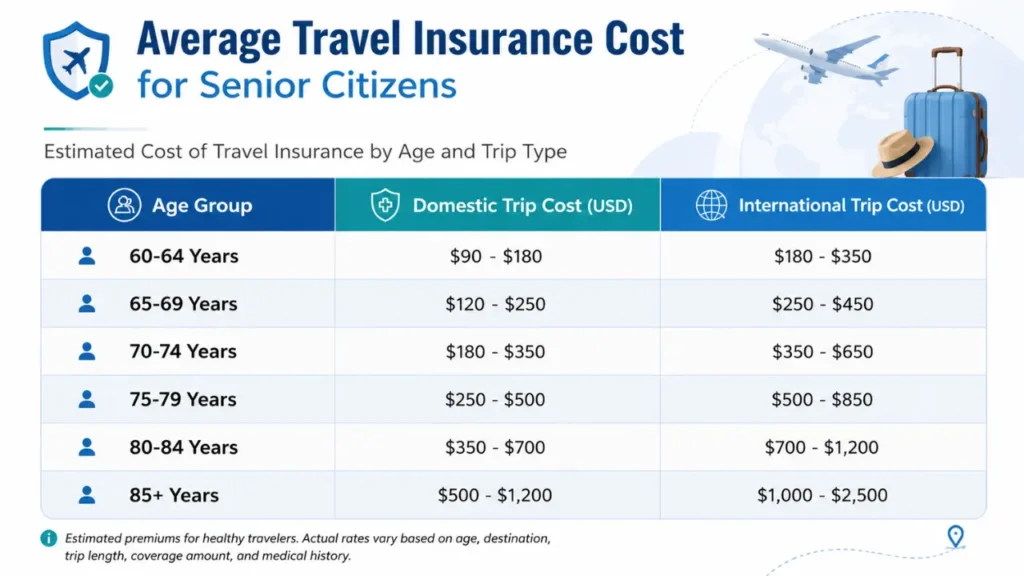
Estimated premiums based on trips valued between $3,000 and $10,000.
Example Premium Comparison
| Traveler Age | Trip Cost | Duration | Estimated Premium |
| 65 | $5,000 | 10 Days | $220-$350 |
| 70 | $7,000 | 14 Days | $350-$550 |
| 75 | $10,000 | 21 Days | $500-$850 |
| 80 | $12,000 | 21 Days | $700-$1,200 |
Insurance companies calculate premiums based largely on age and trip cost.
What Should a Senior Travel Insurance Policy Actually Cover?
Not all travel insurance plans are created equal.
Senior citizens should focus on policies that provide strong medical protection rather than simply choosing the cheapest option.
Emergency Medical Coverage
Medical treatment abroad can be expensive.
Recommended minimum coverage:
| Destination | Recommended Coverage |
| Mexico | $100,000 |
| Europe | $250,000 |
| Asia | $250,000 |
| Australia | $250,000 |
| Worldwide | $500,000 |
Emergency Medical Evacuation
Air ambulance transportation can cost:
| Location | Average Evacuation Cost |
| Mexico to USA | $15,000-$25,000 |
| Caribbean to USA | $20,000-$50,000 |
| Europe to USA | $50,000-$100,000 |
| Asia to USA | $100,000-$250,000 |
Experts generally recommend at least $250,000 evacuation coverage.
Trip Cancellation Coverage
This reimburses prepaid expenses if you must cancel due to:
- Illness
- Injury
- Family emergency
- Severe weather
- Natural disasters
Baggage Protection
Coverage usually ranges from:
- $500
- $1,000
- $2,500
- $5,000
depending on the policy.
Top Travel Insurance Providers for Senior Citizens in Los Angeles
Finding the right travel insurance company can make a big difference for senior travelers, especially those who want strong medical coverage and reliable emergency assistance while away from home. The best policy depends on factors such as your destination, health needs, trip length, and budget.
After reviewing available plans for older travelers, several insurance providers stand out for their coverage options, senior-friendly benefits, and customer service. Below are some of the most popular travel insurance companies that many senior citizens consider when planning domestic or international travel.
1. Allianz Travel Insurance
Allianz is one of the most recognized names in the travel insurance industry. The company offers a variety of plans designed for different types of travelers, making it a popular choice among seniors.
Why many seniors choose Allianz:
- Wide range of travel insurance plans
- Strong trip cancellation and interruption benefits
- Extensive international assistance network
- Reliable customer support services
Ideal for:
- International vacations
- Frequent travelers
- Family trips
- Travelers seeking flexible coverage options
2. Travel Guard
Travel Guard is known for offering customizable policies that allow travelers to choose coverage based on their specific needs. Its plans often include strong medical benefits and protection for costly trips.
Why many seniors choose Travel Guard:
- Higher medical coverage limits
- Flexible policy options
- Strong trip protection benefits
- Coverage designed for cruise vacations
Ideal for:
- Extended vacations
- Expensive travel bookings
- Cruise travelers
- Seniors looking for customizable coverage
3. Seven Corners
Seven Corners has built a strong reputation for providing travel medical insurance, especially for older travelers. Its plans are often competitively priced while still offering valuable medical protection.
Why many seniors choose Seven Corners:
- Affordable premium options
- Strong emergency medical benefits
- Coverage available for older age groups
- Flexible travel medical plans
Ideal for:
- Seniors over 70
- Budget-conscious travelers
- International travelers seeking medical coverage
4. IMG Global
IMG Global specializes in travel medical insurance and international health coverage. Many senior travelers choose IMG because of its high coverage limits and flexible plan options.
Why many seniors choose IMG Global:
- Comprehensive medical coverage
- Strong international protection
- Flexible plan choices
- Coverage for extended trips abroad
Ideal for:
- Long-term travelers
- International vacations
- Travelers seeking higher medical protection
5. GeoBlue
GeoBlue is often preferred by travelers who want access to a broad international healthcare network. The company focuses heavily on medical coverage and global healthcare support.
Why many seniors choose GeoBlue:
- Access to quality healthcare providers worldwide
- Strong travel medical coverage
- Global assistance services
- Easy access to international medical networks
Ideal for:
- Medical-focused travelers
- Frequent international travelers
- Seniors who prioritize healthcare access abroad
Which Travel Insurance Company Is Best for Seniors?
There is no single travel insurance company that is perfect for every senior traveler. The best choice depends on factors such as your age, destination, trip length, health condition, and coverage needs.
If medical coverage is your top priority, providers such as GeoBlue and IMG Global may be worth considering. Travelers focused on trip cancellation benefits may prefer Allianz or Travel Guard, while seniors looking for affordable medical coverage often explore Seven Corners.
Before purchasing a policy, compare coverage limits, exclusions, emergency evacuation benefits, and customer support services. Taking the time to compare plans can help you find coverage that fits both your travel needs and budget.
Travel Insurance Coverage for Pre-Existing Medical Conditions
One of the biggest concerns for senior travelers involves pre-existing medical conditions.
Examples include:
- Diabetes
- Heart disease
- Asthma
- High blood pressure
- Arthritis
- COPD
Many insurers offer waivers for pre-existing conditions if certain requirements are met.
Typical Requirements
- Purchase insurance within 14-21 days of initial trip deposit
- Be medically able to travel when policy is purchased
- Insure full trip cost
Why This Coverage Matters
Without a waiver, claims related to existing health conditions may be denied.
A policy with a pre-existing condition waiver can provide valuable protection and peace of mind.
Conditions Often Covered
- Heart attacks
- Stroke complications
- Diabetes-related emergencies
- Respiratory issues
- Chronic illness flare-ups
Always review policy wording carefully before purchasing.
Why Seniors Cruise Travelers Need Travel Insurance
Cruises are one of the most popular vacation options among senior travelers. While cruises offer convenience and the opportunity to visit multiple destinations in one trip, they can also expose travelers to unexpected medical and travel-related expenses.
Average Medical Costs on Cruise Ships
If you need medical care during a cruise, treatment can be expensive because cruise ship medical centers typically operate as private healthcare facilities.

Many health insurance plans and Medicare provide limited or no coverage for medical treatment received on cruise ships or in foreign ports.
How Much Does Cruise Travel Insurance Cost?
The cost of cruise travel insurance depends on factors such as age, trip cost, destination, and coverage limits.
| Traveler Age | Cruise Cost | Estimated Insurance Premium |
| 60-69 Years | $3,000 | $150 – $300 |
| 70-79 Years | $5,000 | $250 – $500 |
| 80+ Years | $7,000 | $400 – $900 |
Although travel insurance adds to the overall vacation cost, it can provide valuable financial protection against medical emergencies, trip interruptions, and unexpected travel disruptions that could otherwise cost thousands of dollars.
Tips for Choosing the Right Travel Insurance Policy
Choosing the right travel insurance policy starts with understanding your travel plans and personal needs. A policy that works well for one traveler may not be the best fit for another.
Consider Where You’re Traveling
The amount of coverage you need often depends on your destination. Domestic trips usually require less protection, while international travel may need higher medical and emergency evacuation coverage.
Think About Your Health Needs
If you have a pre-existing medical condition or ongoing health concerns, look for a policy that offers strong medical benefits and appropriate coverage options.
Compare More Than Just the Price
Don’t choose a policy based solely on the premium. Review important benefits such as:
- Medical coverage
- Emergency evacuation coverage
- Trip cancellation protection
- Baggage and personal belongings coverage
Read the Policy Exclusions
Before purchasing a plan, take a few minutes to review what is not covered. Common exclusions may include:
- High-risk activities
- Known events or situations
- Certain medical conditions
- Alcohol-related incidents
Understanding these exclusions can help prevent surprises if you need to file a claim later.
Common Travel Insurance Mistakes Senior Citizens Should Avoid
Buying travel insurance is a smart decision, but choosing the wrong policy or overlooking important details can leave you with less protection than expected. Many senior travelers make simple mistakes that can lead to denied claims, unexpected expenses, or inadequate coverage during their trip.
Here are some of the most common travel insurance mistakes and how to avoid them.
1. Choosing a Policy Based Only on Price
One of the biggest mistakes travelers make is selecting the cheap travel insurance policy without reviewing the coverage details. While a low premium may seem attractive, inexpensive plans often come with lower coverage limits, more exclusions, and fewer benefits.
Instead of focusing only on price, compare what each policy covers and whether it provides enough protection for your specific travel needs.
2. Waiting Until the Last Minute to Buy Coverage
Many travelers delay purchasing travel insurance until just before departure. However, buying a policy early can provide important advantages.
Depending on the insurer, early purchase may offer:
- Better trip cancellation protection
- Coverage for pre-existing medical conditions
- Additional travel benefits
- Greater flexibility if travel plans change
Purchasing coverage soon after booking your trip can help maximize your protection.
3. Overlooking Medical Coverage Limits
Medical emergencies can be one of the most expensive travel-related risks, especially for senior citizens. Some travelers purchase policies with low medical coverage limits simply to save money.
A policy that offers insufficient medical protection may leave you responsible for significant out-of-pocket expenses if you become sick or injured while traveling. Always review medical and emergency evacuation limits before purchasing a plan.
4. Assuming Medicare Covers International Travel
Many seniors are surprised to learn that Medicare generally provides little or no coverage for medical treatment received outside the United States.
If you are traveling internationally, relying solely on Medicare could expose you to substantial medical expenses. Travel insurance with emergency medical coverage can help fill this important gap.
5. Providing Incomplete or Incorrect Information
When applying for travel insurance, accuracy matters. Failing to disclose relevant medical conditions, travel details, or other required information could result in claim delays or denials.
Always provide complete and accurate information during the application process. Being honest from the start helps ensure that your coverage works as expected when you need it most.
6. Not Reading the Policy Before Traveling
Many travelers purchase a policy and never review the details. As a result, they may not fully understand what is covered, what is excluded, or how to file a claim.
Taking a few minutes to read your policy documents can help prevent surprises later and ensure you know exactly what protection you have while traveling.
7. Ignoring Emergency Evacuation Coverage
Some travelers focus only on trip cancellation benefits and overlook emergency evacuation coverage. In serious medical situations, transportation to the nearest suitable medical facility or back home can cost tens of thousands of dollars.
Having adequate evacuation coverage can provide valuable financial protection and peace of mind during your trip.
By avoiding these common mistakes, senior citizens can choose a travel insurance policy that provides stronger protection, better value, and greater confidence while traveling. A little extra research before purchasing coverage can make a significant difference if an unexpected situation occurs during your journey.
How Senior Citizens Can Save Money on Travel Insurance
Travel insurance is an important part of any trip, but that doesn’t mean you have to overpay for coverage. With a little planning and comparison, senior travelers can find a policy that offers strong protection at a reasonable price.
Buy early – Purchasing within 14–21 days of your first trip payment often unlocks better benefits at no extra charge, including pre-existing condition waivers.
Compare Quotes From Different Insurance Companies – Travel insurance rates can vary significantly from one provider to another. Two companies may offer similar coverage but charge very different premiums. Taking the time to compare multiple quotes can help you find better value without sacrificing important benefits.
Buy Your Policy Soon After Booking Your Trip – Purchasing travel insurance shortly after making your first trip payment may provide access to additional benefits, such as coverage for pre-existing medical conditions and broader trip cancellation protection. In many cases, buying early can also help you secure the coverage you need before any unexpected issues arise.
Consider an Annual Travel Insurance Plan – If you travel several times throughout the year, an annual multi-trip policy may be more cost-effective than purchasing separate insurance plans for every vacation. Frequent travelers often find that annual coverage provides both convenience and long-term savings.
Keep Your Health Information Accurate – When applying for travel insurance, always provide accurate information about your age, health status, and travel plans. Incorrect details can lead to higher costs or problems with future claims. Being honest helps ensure you receive the right coverage at the correct price.
Travel During Less Busy Times of the Year –Peak travel seasons often come with higher trip costs and an increased chance of delays or disruptions. Traveling during less crowded periods may not only help reduce overall vacation expenses but can also lower the value of the trip being insured, which may result in a lower insurance premium.
Focus on Value Rather Than the Lowest Price –While it can be tempting to choose the cheapest policy available, the lowest-cost option may not provide enough protection. A slightly higher premium could offer significantly better medical coverage, emergency evacuation benefits, and trip cancellation protection. Choosing the right balance between cost and coverage can save you much more in the long run.
For most senior citizens, the best way to save money on travel insurance is to compare plans carefully, purchase coverage early, and select a policy that fits their specific travel needs rather than simply choosing the cheapest option available.
Is Travel Insurance Worth It for Senior Citizens?
Travel insurance is a worthwhile investment for most senior travelers. While no one expects a medical emergency, trip cancellation, or travel disruption, unexpected situations can happen at any time—especially when traveling away from home.
When planning a trip, most people focus on expenses such as flights, hotels, cruises, and sightseeing activities. However, many overlook the financial risks that can arise during their journey. A sudden illness, injury, or family emergency could force you to cancel your trip or seek medical treatment while traveling. Without travel insurance, these unexpected costs can quickly add up and place a significant financial burden on your travel budget.
Consider the potential costs travelers may face without adequate coverage:
| Event | Potential Cost |
| Emergency Room Visit Abroad | $1,000 – $10,000 |
| Hospital Stay | $10,000 – $100,000+ |
| Medical Evacuation | $25,000 – $250,000+ |
| Trip Cancellation | $2,000 – $20,000+ |
| Lost or Delayed Luggage | $500 – $5,000+ |
When compared to these potential expenses, the cost of a travel insurance policy is relatively small. Even a single medical emergency can cost significantly more than the premium paid for coverage.
One of the biggest advantages of travel insurance is the peace of mind it provides. Knowing that you have access to emergency assistance, medical support, and financial protection allows you to focus on enjoying your trip rather than worrying about what could go wrong.
It’s important to remember that the best travel insurance plan is not always the least expensive one. The right policy is the one that matches your destination, health needs, travel budget, and overall level of risk. Paying slightly more for better coverage can potentially save thousands of dollars if an unexpected event occurs.
Before purchasing a policy, compare coverage options carefully, review benefit limits, and make sure the plan meets your specific travel requirements. A well-chosen travel insurance policy can help protect both your health and your travel investment, allowing you to travel with greater confidence wherever your plans take you.
FAQs
How much medical coverage should a senior traveler have?
Most experts recommend at least:
- $100,000 for nearby international destinations
- $250,000 for Europe and Asia
- $500,000 for extensive international travel
Higher coverage limits provide better protection against unexpected medical expenses.
Does travel insurance cover cruise vacations?
Yes. Many travel insurance plans offer cruise-specific benefits, including coverage for missed connections, medical emergencies onboard, emergency evacuations, and trip interruptions.
Can I buy travel insurance after booking my trip?
Yes. Most insurance providers allow travelers to purchase coverage after booking a trip. However, waiting too long may reduce eligibility for certain benefits and coverage options.
Does Medicare cover me when I travel internationally?
In most cases, no. Medicare provides little to no coverage for medical treatment received outside the United States. If you are traveling internationally, you should not rely on Medicare as your primary medical coverage. A travel insurance policy with strong emergency medical benefits is essential.

Aarvith is the author and founder of Insurance Centrik. He researches various insurance topics, including auto, health, travel, home, and business insurance. He provides accurate insurance information from reliable sources and industry expertise.