
Buying pet insurance does not always mean every benefit becomes available that day. A pet insurance waiting period is the time between the policy’s effective date and the date coverage becomes available for a particular accident, illness, or condition.
There is no single waiting period used by every insurer. One company may cover accidental injuries immediately in a particular state, while another may require several days. Illness coverage often has a longer wait. Orthopedic conditions, including some knee and hip problems, may have their own rules.
The dates shown on your declarations page and in your state-specific policy control your coverage. Marketing pages and general comparisons are useful starting points, but they cannot replace the terms issued for your pet.
How Long Is a Typical Pet Insurance Waiting Period?
Many accident and illness plans use different waiting periods for different types of care. Common time frames include:
- Accidental injuries: immediately to about 15 days
- Illnesses: commonly 14 to 30 days
- Orthopedic conditions: 14 days to six months or longer, depending on the insurer and state
- Preventive or wellness benefits: sometimes available on the effective date, although these benefits may be separate from insurance coverage
These are broad ranges, not guaranteed terms. Waiting periods can vary by state, policy form, coverage type, and enrollment channel. Some state rules also limit or prohibit certain waiting periods.
The safest approach is to find three items in your policy documents: the effective date, the waiting-period provision, and the definition of a pre-existing condition. Together, those sections explain when a future claim may become eligible.
Why Do Pet Insurance Companies Use Waiting Periods?
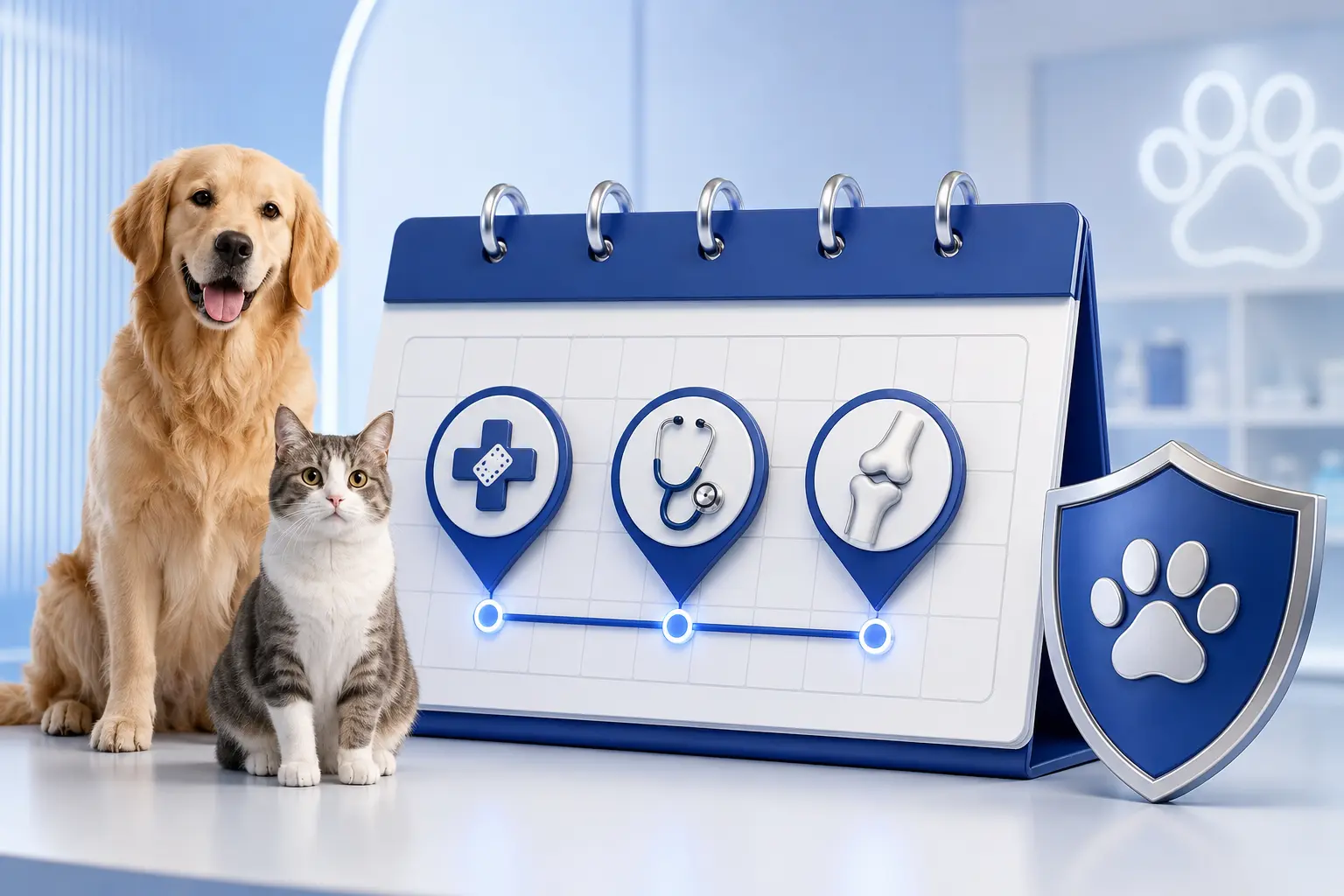
Waiting periods discourage someone from buying a policy only after a pet has already developed symptoms or suffered an injury. Insurance is intended to help with eligible future events, not veterinary problems that started before coverage became available.
Consider a dog that begins limping on Monday. If its owner could purchase insurance on Tuesday and submit a claim for the same problem on Wednesday, the insurer would be paying for a condition that was already present when the policy was purchased. That would make the risk pool harder to price for everyone enrolled.
This is also why the date when symptoms first appeared may matter more than the date of diagnosis. A veterinarian might not identify arthritis, a ligament injury, or an ear infection until after the waiting period. If the medical record shows related signs during the waiting period, the insurer may still review the condition as pre-existing.
Waiting Periods by Type of Coverage
Accident coverage
Accident coverage may apply to events such as a bite wound, broken bone, swallowed object, or injury caused by a vehicle. It often has the shortest waiting period, but “short” does not always mean immediate.
An accident must usually happen after the applicable waiting period ends. Buying a policy after an accident occurs will not make the resulting veterinary expenses eligible. Treatment received later may also remain excluded when it relates to the earlier accident.
Illness coverage
Illness waiting periods are commonly longer because many diseases develop gradually. Vomiting, coughing, itching, loss of appetite, or unusual behavior can appear before a veterinarian reaches a diagnosis.
Suppose a cat starts vomiting on day 10 of a 14-day illness waiting period but receives a diagnosis on day 16. The insurer may examine the first symptom date, not only the diagnosis date. If the vomiting was a clinical sign of the diagnosed condition, expenses connected to that illness may not be covered.
Orthopedic conditions
Some policies apply a separate waiting period to orthopedic conditions. The definition may include cruciate ligament injuries, hip dysplasia, patellar luxation, intervertebral disc problems, and other conditions involving joints, bones, tendons, or ligaments.
Do not assume every hereditary condition has a long wait or that every insurer treats orthopedic problems the same way. Some providers place particular conditions under the ordinary illness period. Others use a separate orthopedic period for dogs, and the rule may change from one state to another.
Large-breed dog owners should review this section carefully, but breed alone does not make a condition pre-existing. What usually matters is whether signs, symptoms, treatment, or veterinary advice connected to the condition existed before coverage became available, based on the policy definition.
Preventive and wellness care
Routine care benefits may have different rules from accident and illness coverage. Vaccinations, annual examinations, flea prevention, and dental cleaning may be offered through an optional wellness package rather than the insurance portion of a plan.
A wellness benefit that starts immediately does not remove the waiting period for illnesses or injuries. It also does not mean a medical condition discovered at a routine visit will automatically be covered.
Pet Insurance Waiting Period and Cost Comparison
| Provider | Accident Waiting Period | Illness Waiting Period | Orthopedic Waiting Period | Estimated Monthly Cost |
| Healthy Paws | No waiting period for accident-related conditions in most current state forms | 15 days | 15 days for most orthopedic conditions; 30 days for hip dysplasia | Dogs: $62 Cats: $32 |
| Trupanion | 5 days for injuries | 30 days | No separate period in most states | Dogs: $88 Cats: $48 |
| Lemonade | Accidents may be covered from the policy start date | 14 days | 30 days | Dogs: $44 Cats: $23 |
| Embrace | Varies by state | 14 days | Varies by state; six months for dogs under some policy forms | Dogs: $84 Cats: $45 |
| ASPCA Pet Health Insurance | Commonly 14 days | Commonly 14 days | Commonly 14 days for knee and ligament conditions | Dogs: $103 Cats: $34 |
| Pets Best | Commonly 3 days | Commonly 14 days | Six months for cruciate ligament conditions under some policy forms | Dogs: $81 Cats: $25 |
The estimates are based on different sample pets and coverage limits, so they should not be treated as direct price comparisons. Your premium may change based on your pet’s age, breed, ZIP code, annual limit, deductible, reimbursement percentage, and selected add-ons.
Waiting periods can also differ by state and policy version. Before enrolling, check the policy declarations page for the exact accident, illness, and orthopedic coverage dates. A shorter waiting period can be useful, but the deductible, reimbursement rate, exclusions, annual limit, and monthly premium should also be considered.
When Does the Waiting Period Begin?
The clock generally begins on the policy’s effective date, not when you first request a quote. The effective date may be the enrollment date, but that is not something to assume. Payment processing, underwriting requirements, or the date selected during enrollment can affect when the policy starts.
After enrollment, open the declarations page and write down:
- The policy effective date
- The end date for the accident waiting period
- The end date for the illness waiting period
- Any separate orthopedic or condition-specific date
Pay close attention to wording such as “after,” “following,” or “from” the effective date. If the last day is unclear, ask the insurer to confirm the first date on which a new event would be eligible. Keep the response with your policy records.
What Happens If a Pet Gets Sick or Injured During the Waiting Period?
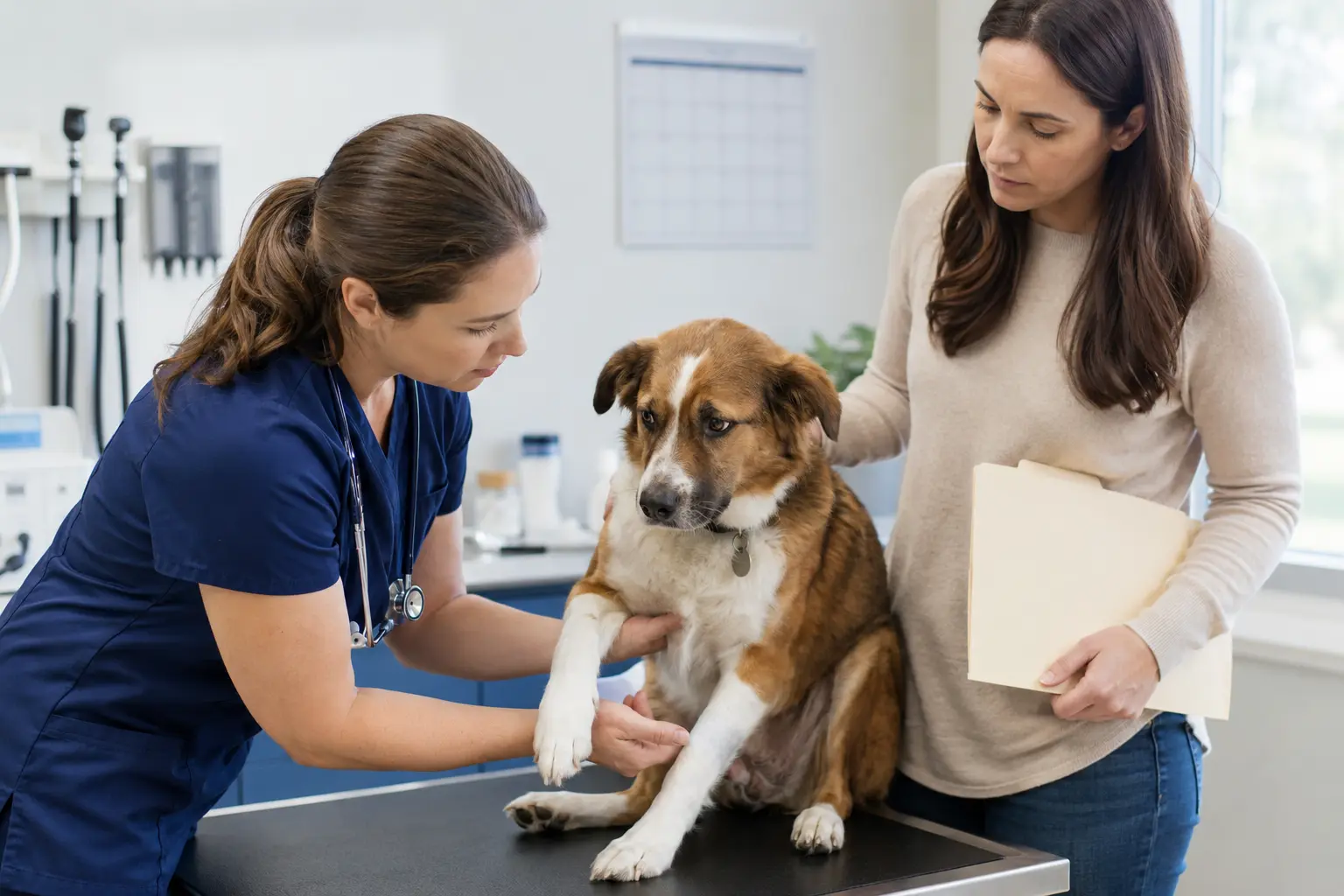
Care received during a waiting period is generally not eligible for reimbursement under the coverage that has not yet started. More importantly, related signs or symptoms may affect coverage after the waiting period ends.
For example, imagine that a dog develops a limp during an orthopedic waiting period. The limp improves, but a veterinarian later diagnoses a cruciate ligament problem. The insurer may request earlier medical records and decide whether the first limp was connected to the later diagnosis. The decision will depend on the medical evidence, policy wording, and state law.
Do not delay veterinary care just to reach the end of a waiting period. A pet’s health should come first, and postponing treatment can make a problem worse. Ask the veterinarian to document the symptoms, examination findings, diagnosis, and recommended care accurately. You can also contact the insurer for an explanation of how the claim will be reviewed, but only the completed claim process can produce a formal coverage decision.
If a claim is denied, read the written explanation and compare it with the policy. Ask which medical record and contract provision supported the decision. Follow the insurer’s appeal instructions if you believe information was missing or the policy was applied incorrectly. Your state department of insurance may also provide consumer assistance.
Does a Problem During the Waiting Period Become Pre-Existing?
It can. Many pet insurance policies define a pre-existing condition by signs, symptoms, veterinary advice, or treatment that occurred before the effective date or during an applicable waiting period. A formal diagnosis is not always required.
That does not necessarily mean every future health problem will be excluded. Some insurers reconsider certain curable conditions after a specified symptom-free and treatment-free period. Other conditions may remain excluded. Knee and ligament problems can also be subject to special bilateral rules, which may affect the opposite leg.
Because definitions differ, avoid relying on a general statement that a provider “covers curable pre-existing conditions.” Check how the contract defines curable, how long the pet must remain free of symptoms and treatment, and which conditions are exceptions.
Can a Pet Insurance Waiting Period Be Waived?
Sometimes, but only when the insurer’s rules allow it. A provider may require a veterinary examination within a specific window before or after the effective date. The veterinarian may need to complete a particular form, and the insurer may need to receive it by a deadline.
An examination does not automatically erase every waiting period. It may apply only to certain coverage or may be unavailable in some states. A promotional enrollment offer through a participating veterinarian, shelter, or breeder can also have separate terms.
Before paying for an examination solely to request a waiver, ask the insurer these questions:
- Which waiting period can the examination waive?
- Is the waiver available in my state and under my plan?
- What form must the veterinarian complete?
- When must the examination take place?
- What is the submission deadline?
- Will I receive written confirmation if the waiver is approved?
Keep that confirmation. A verbal answer from a sales representative is less useful during a later claim review than a written endorsement or updated declarations page.
What to Check Before Enrolling
Waiting periods should be compared alongside the rest of the policy. A plan with a shorter wait is not automatically the better choice if it excludes the treatment your pet is most likely to need or has a reimbursement structure that does not fit your budget.
Before enrolling:
- Download the sample policy for your state, not only the national brochure.
- Review the definitions of accident, illness, orthopedic condition, and pre-existing condition.
- Check for bilateral exclusions involving knees, hips, eyes, or other paired body parts.
- Confirm whether examination fees, diagnostic tests, prescriptions, rehabilitation, and hereditary conditions are included.
- Compare the deductible, reimbursement percentage, annual limit, and any per-condition limit.
- Find out whether the insurer requires medical records or a recent veterinary examination.
- Ask whether changing coverage at renewal could create new waiting periods.
- Save the quote, policy, endorsements, declarations page, and written answers from the insurer.
Enrollment is usually most useful before a pet develops symptoms. That does not guarantee every future claim will be paid, but it reduces the chance that an early medical record will place a condition outside coverage.
If surgery is one of your main concerns, read our explanation of pet insurance for surgery and compare the exclusions as carefully as the reimbursement rate.
Before Choosing a Pet Insurance Policy
A pet insurance waiting period is not one universal countdown. Accident, illness, orthopedic, and wellness benefits may each begin on a different date. Symptoms that appear before the relevant date can affect not only the immediate claim but also later treatment for the same condition.
Check the effective date and waiting-period schedule before enrolling, then save the final policy documents. If anything is unclear, ask the insurer to identify the exact contract language and confirm the first eligible date in writing.
Insurance Centrik provides educational insurance information and does not sell pet insurance or recommend a policy as a licensed agent.
FAQs
Can a vet exam waive the pet insurance waiting period?
Sometimes. Healthy Paws allows a clinical exam to waive certain waits, but this isn't universal — Trupanion, for instance, offers no waiver process at all.
Is the pet insurance waiting period the same for wellness coverage?
No. Wellness add-ons often start immediately since they're a separate benefit, but that doesn't shorten the wait for actual injury or illness claims.
Does the pet insurance waiting period get longer for older pets or certain breeds?
No, the wait length itself stays the same. What changes is eligibility — some insurers won't cover conditions like hip dysplasia past a certain enrollment age.
Do symptoms during the pet insurance waiting period count against me without a diagnosis?
Usually yes. Most insurers look at when symptoms first appeared, not when a vet formally diagnosed it, so the condition may still be treated as pre-existing.

Aarvith is the author and founder of Insurance Centrik. He researches various insurance topics, including auto, health, travel, home, and business insurance. He provides accurate insurance information from reliable sources and industry expertise.