

There’s something about an old house that a new build just can’t copy. The creak in the third stair. Plaster walls instead of drywall. A porch that’s watched a hundred summers go by. Buyers fall in love with that character all the time, but when it comes to home insurance for older homes, insurance companies feel differently. They don’t see charm. They see a roof that might be past its useful life, wiring that predates modern building codes, and pipes that could fail without warning. None of that means an old home can’t be insured. It just means the process looks a little different than it does for a house built five years ago.
Here’s what actually drives the cost, what an insurer will check before they hand you a policy, and what to do if a standard policy isn’t an option.
Why Older Homes Cost More to Insure
The gap isn’t small. According to a 2026 analysis by MoneyGeek based on hundreds of millions of homeowners insurance quotes, a newer home averages around $2,379 a year in premiums, while an older home averages roughly $4,062 a year at the same coverage level. That’s about 70% more, and the difference isn’t random. It comes down to a handful of specific risk factors that insurers price into every quote.
| Home Age | Average Annual Premium | Average Monthly Premium |
| Newer home | $2,379 | $198 |
| Middle-aged home | $3,467 | $289 |
| Older home | $4,062 | $339 |
Note:- Figures reflect national averages for standard coverage. Your actual rate depends on your state, dwelling coverage amount, and claims history. States like Florida average well above $10,000 a year, while states like Hawaii average under $700.
Outdated wiring. Homes built before the 1960s sometimes still have knob-and-tube wiring. Homes from the 1960s and 70s may have aluminum wiring instead of copper, which is more prone to overheating at the connection points. Older electrical panels, particularly certain Federal Pacific and Zinsco brands, are flagged by many insurers as fire risks regardless of how well they’ve been maintained.
Aging plumbing – Galvanized steel pipes corrode from the inside over decades and eventually restrict water flow or leak. Homes built roughly between the 1970s and early 1990s sometimes have polybutylene piping, a plastic pipe material that’s known to become brittle and fail without much warning. Both are common causes of home insurance water damage from a leaking roof or a burst pipe on an older property.
A roof nearing the end of its life – Most insurers want to see at least five years of remaining useful life on a shingle roof, or a bit more for tile or metal. A 20-plus year old roof with no documented repairs is one of the fastest ways to get a higher quote or a flat refusal.
Foundation and structural wear – Hairline cracks that would barely register on a five-year-old home can look concerning on a home built in 1955, especially if an inspector has no history of the property to compare against.
Rebuild cost – Plaster walls, solid wood trim, and custom millwork all cost more to replicate than modern equivalents. Rebuilding an older home to its original standard is almost always more expensive than most owners expect, which pushes the dwelling coverage amount, and the premium, higher.
The Four-Point Inspection: What Insurers Actually Check
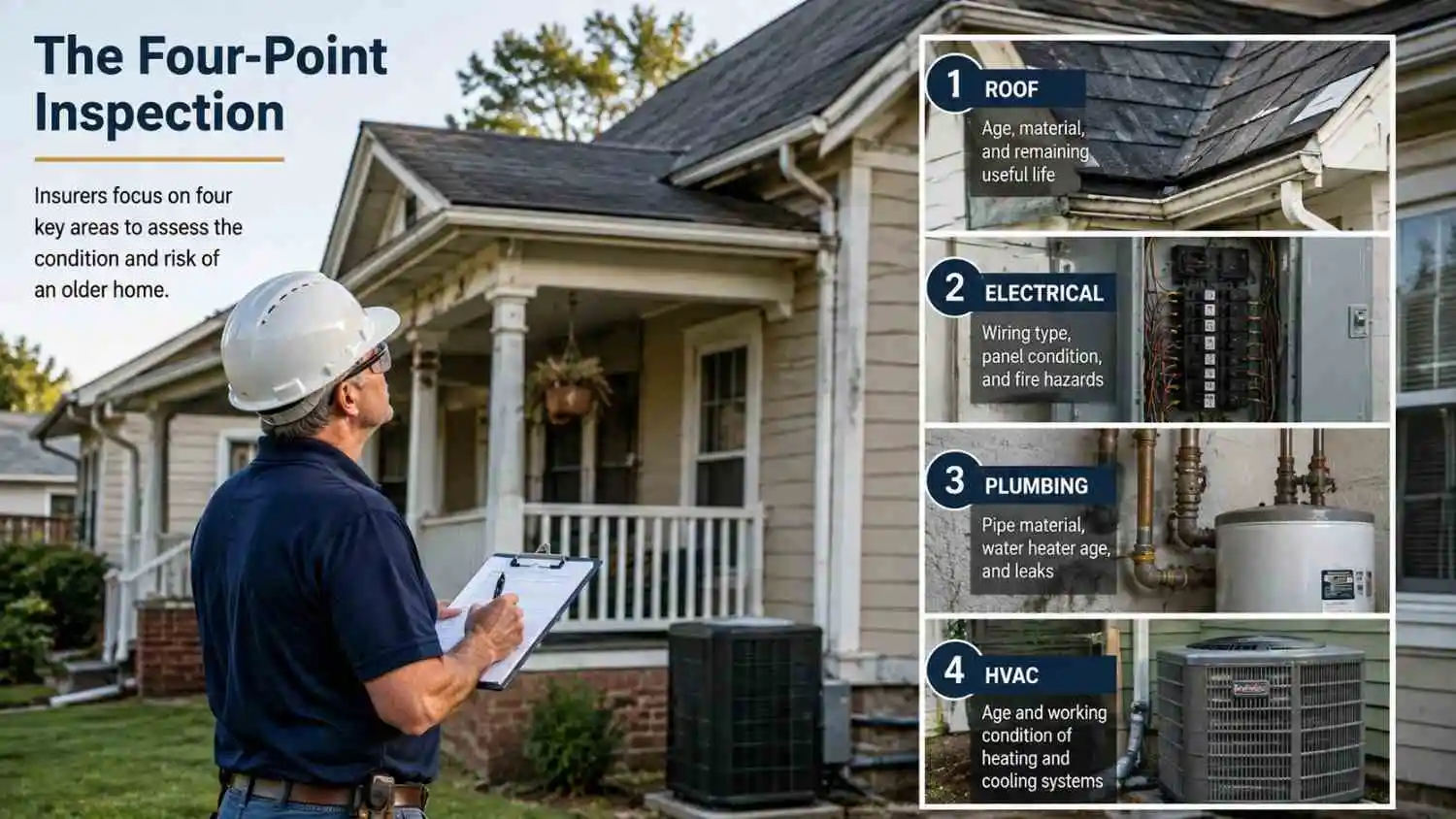
If your home is roughly 20 to 30 years old or more, most carriers will require what’s called a four-point inspection before issuing or renewing a policy. This isn’t the same as a full home inspection you’d get when buying a house. It’s a narrower, insurance-specific check of exactly four systems:
- Roof – age, material, and whether it has enough life left to avoid a near-term claim
- Electrical – wiring type, panel brand and condition, and any visible fire hazards
- Plumbing – pipe material, water heater age, and signs of past or active leaks
- HVAC – age and working condition of the heating and cooling system
A licensed inspector usually completes this in 30 to 60 minutes, and it typically costs somewhere between $75 and $150 depending on your area. If all four systems check out, getting a standard policy is usually straightforward. If one or two raise red flags, expect one of three outcomes: a higher premium, specific exclusions on your policy, or a request to fix the issue within a set window before coverage is approved.
Replacement Cost vs. Actual Cash Value
This is the part of an older home policy that trips people up the most, so it’s worth slowing down on.
Replacement Cost Value (RCV) pays what it actually costs to rebuild or repair your home using today’s materials and labor prices. Your home’s age doesn’t reduce the payout.
Actual Cash Value (ACV) pays the replacement cost minus depreciation. If your 50-year-old roof is destroyed in a storm, an ACV policy pays what that worn-out roof was worth right before the loss, not what a brand-new roof costs to install.
| Category | Replacement Cost Value | Actual Cash Value |
| What it pays | Full cost to rebuild with today’s materials | Depreciated value at time of loss |
| Effect of home’s age | No reduction for age | Payout drops as items age |
| Example: 50-year-old roof damaged | Pays for a brand-new roof | Pays what the old roof was worth, not a new one |
| Common with | Standard HO-3 policies | HO-8 policies for older homes |
For an older home, that gap can be substantial. Before comparing quotes, it’s worth understanding how home insurance dwelling coverage is calculated, since this RCV vs. ACV decision is exactly the kind of tradeoff most older-home owners eventually have to make.
What Is an HO-8 Policy?
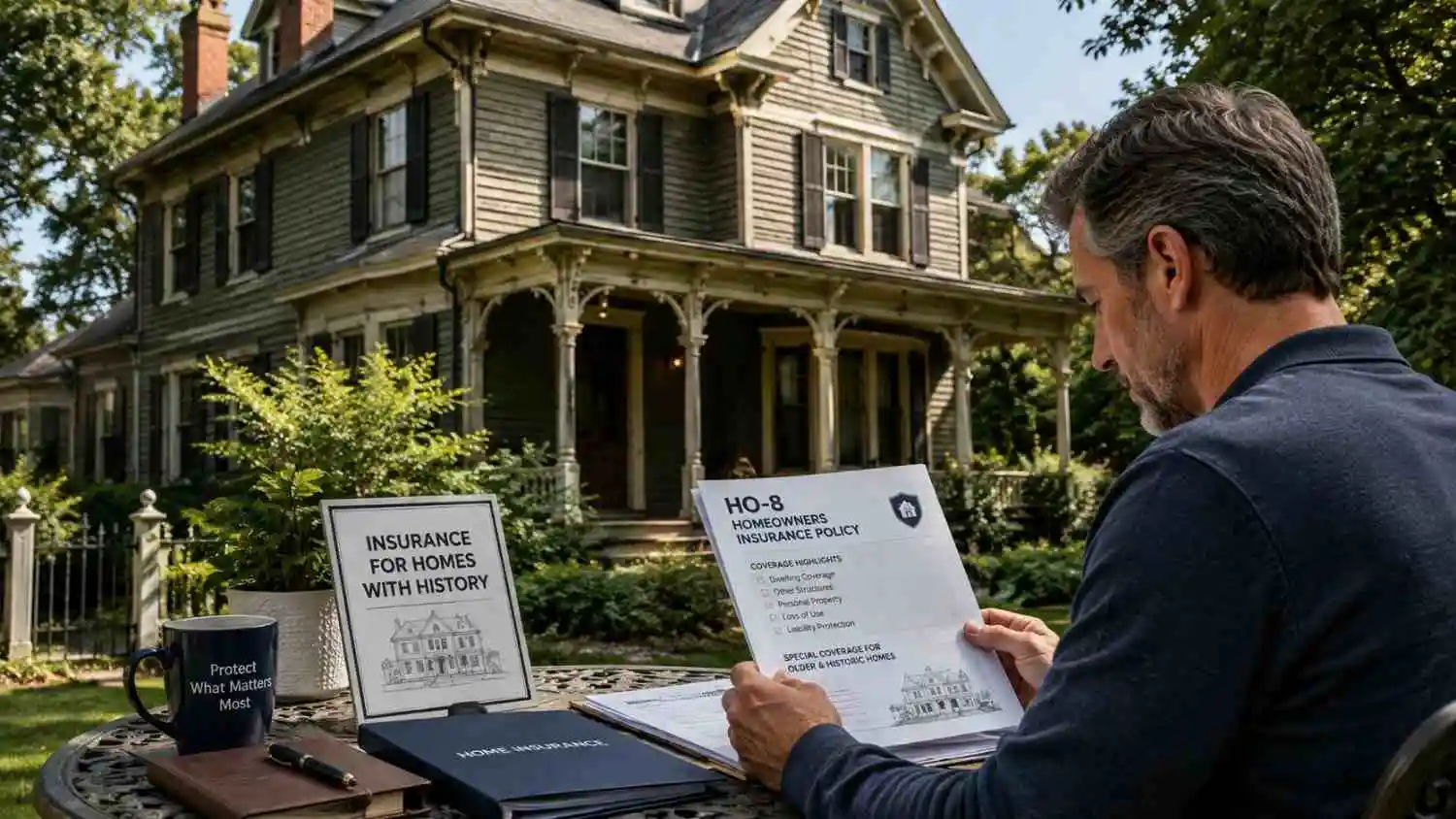
If your home is more than 40 years old, has historic status, or would cost more to rebuild than it’s currently worth on the market, a standard HO-3 policy may not be available to you at all. That’s where an HO-8 policy, sometimes called a Modified Coverage Form, comes in.
An HO-8 policy exists specifically for homes that can’t meet the underwriting requirements of a normal policy. A few things make it different from standard coverage:
- It pays claims on an actual cash value basis, not full replacement cost.
- It only covers named perils, meaning specific risks listed in the policy (like fire, windstorm, and vandalism), rather than covering everything except what’s explicitly excluded.
- Coverage limits and included risks are generally narrower than an HO-3 policy.
- You typically don’t need to pass a four-point inspection or upgrade your wiring and plumbing to qualify, which is the entire reason the policy exists.
It’s not a downgrade to be embarrassed about. For a lot of historic and older homes, an HO-8 policy is the only realistic path to coverage without a major renovation first. It’s worth knowing, though, that not every carrier offers it, so you may need to shop around specifically for one that does.
Read Also: Home Insurance vs Renters Insurance Coverage Comparison
Practical Steps to Get Covered Without Overpaying
Getting an inspection before you shop for quotes, not after, makes a real difference. Knowing exactly what an insurer will flag lets you fix the cheapest problems first and walk into the conversation prepared. If you can only fix one thing, prioritize the wiring, since outdated electrical systems are the single biggest red flag for most carriers, followed by plumbing, then roof age.
It also pays to get quotes from at least three companies. Every insurer weighs the age and condition of a home a little differently, and the gap between quotes on an older property can be larger than you’d expect on a newer one, especially in states where premiums already run high. If a standard policy is refused or heavily limited, ask directly about an HO-8 or high-value home policy, since carriers don’t always volunteer these options on their own. It also helps to understand the home insurance claim process ahead of time, since older homes tend to need repairs more often than newer ones.
One more thing worth watching is the vacancy clause. Many standard policies stop covering a home once it sits empty for 30 to 60 days, which matters if you’re renovating before moving in, or if you’ve inherited a property that’s been sitting vacant.
Final Thoughts on Insuring an Older Home
An old home isn’t a liability, it just needs a different approach to home insurance for older homes than a new build requires. The owners who get the best rates are usually the ones who go in already knowing what an insurer is going to ask about: the roof, the wiring, the pipes, and the true cost to rebuild. Handle those four areas before you shop for coverage, and home insurance for older homes stops being a pricing problem and starts being what it actually is, a well-built property with a little more history behind it.
FAQs
Can an insurance company refuse to cover an old house?
Yes. If a four-point inspection turns up serious issues like unsafe wiring, a failing roof, or high-risk plumbing materials, a carrier can decline standard coverage. This is one of the main reasons HO-8 policies exist.
What exactly does an HO-8 policy cover?
It covers your dwelling, personal property, and liability, but only for specific named perils, and payouts are based on actual cash value rather than full replacement cost. It's designed for homes over 40 years old that don't qualify for a standard policy.
What's the fastest way to lower the cost of insuring an old home?
Get a four-point inspection done before you shop for quotes, fix outdated wiring first if budget is limited, then plumbing, then roof issues, and compare quotes from several carriers since pricing on older homes varies more than it does on newer ones.
Is replacement cost or actual cash value more important for an old home?
Replacement cost coverage generally protects you better, since it pays to rebuild with current materials regardless of your home's age. Actual cash value factors in depreciation, which can leave a meaningful gap in your payout on an older property.

Bipin is a Senior Insurance Researcher and Content Strategist at Insurance Centrik with 8+ years of industry experience. He covers auto, health, home, life, travel, business, and dental insurance, helping readers make informed, confident coverage decisions.