

Accident-and-illness pet policies generally do not reimburse a routine teeth cleaning, because insurers treat it as predictable maintenance rather than an unexpected event. Healthy-mouth cleanings are mostly paid through an optional wellness add-on, which carries a fixed yearly limit. Dental illness (gum disease, infected teeth, extractions) can be covered by the base plan when the problem began after the waiting period and was not already in your pet’s records.
- Routine cleaning: typically a wellness add-on benefit, not part of the base policy
- Dental disease and extractions: may be covered, depending on the insurer and your pet’s history
- Estimated US cost of a dog cleaning: about $300 to $800 before extractions
- A common reason claims are denied: the dental problem was documented before coverage began
A vet hands you a $700 estimate for your dog’s teeth, and you start wondering whether the policy you pay for every month will cover any of it. The answer depends on how dental cleaning pet insurance is built into your plan, because routine cleaning and dental disease treatment are handled as two separate things. The sections below cover where the money actually comes from, what US prices look like, and which policy terms decide whether a claim is paid or denied.
Note: Cost figures in this article are estimates compiled from published 2026 US prices. The national dog-cleaning average of about $388 comes from CareCredit data as cited by those guides. Reimbursement rules are general information, and your own policy wording is what applies to your claim.
How Pet Dental Insurance Works: Three Separate Buckets
Pet insurers do not treat “teeth” as a single category. A dental bill gets sorted into one of three buckets, and the bucket decides whether you get paid:
- Preventive care: the annual exam, scaling and polishing of a healthy mouth, brushing supplies
- Dental illness: periodontal disease, tooth infections and abscesses, tooth resorption, oral tumors
- Dental injury: a tooth fractured in an accident, such as a car strike or a fall
Most standard policies are built for the second and third buckets only. The reasoning is simple: insurance is designed for costs you cannot predict. A yearly cleaning is predictable, so insurers push it into the wellness category, where you pay a separate premium for it.
Once a claim does qualify, the mechanics are the same as any other pet claim. You pay the vet, submit an itemized invoice, and the insurer subtracts your deductible, applies your reimbursement percentage (commonly 70%, 80% or 90%), and caps the payout at your annual or per-condition limit. Deductibles vary widely, from roughly $100 to $1,000 depending on the plan.
Note:This section is general information. Exact definitions of “dental illness” and “preventive care” differ by insurer and state.
Does Pet Insurance Cover Dental Cleaning? What Is In and What Is Out
Routine dental cleaning is generally not covered by an accident-and-illness policy. A cleaning to treat an existing, eligible dental illness often is. That distinction trips up many owners, since the procedure looks identical on the invoice: the same anesthesia, the same scaling, the same polishing. What changes is the diagnosis written in the records.
Here is how common dental situations tend to be treated across US policies:
| Situation | Typical treatment under a US policy |
| Annual cleaning, healthy mouth | Not covered by the base plan; may be partly reimbursed by a wellness add-on |
| Cleaning to treat diagnosed gum disease | Often covered as dental illness if the condition is new and eligible (insurer-specific) |
| Extractions for infection or an accident-related fracture | Often covered if eligible |
| Dental X-rays | Covered when taken to diagnose or treat a covered condition |
| Cosmetic work such as whitening | Excluded |
| Dental disease that predates the policy or appears inside the waiting period | Excluded as pre-existing |
| Anesthesia-free scaling | Frequently not reimbursed; check your policy wording |
| Toothbrushes, dental chews, water additives | Not covered |
Some insurers add a condition to dental illness coverage: they ask for proof of a dental exam within the past year, or a documented cleaning, before they pay a dental claim. That requirement lives in the policy terms, not in any general rule, so read that part of your plan carefully.
Wellness Add-On for Dental Cleaning: Where Routine Cleanings Actually Get Paid
If you want routine cleanings reimbursed, a wellness add-on is the usual route. It is an optional rider, sold on top of an accident-and-illness plan, that reimburses a set list of preventive services: exams, vaccines, flea and tick prevention, bloodwork, and, on many plans, a dental cleaning.
Two things separate a wellness add-on from regular insurance. First, it pays a fixed amount per service or up to a sub-limit, often well below what a full anesthetic cleaning costs. Second, it works more like a prepaid budget than risk protection. You are paying a monthly fee to get part of your own predictable spending back.
Wellness add-ons are often priced somewhere between $15 and $45 a month, depending on the insurer, the plan tier and your pet (estimate; confirm with a quote). Not every company offers one. Some carriers sell only accident-and-illness coverage, so if routine cleaning reimbursement matters to you, check that before comparing premiums.
For most owners, the add-on is the main way dental cleaning pet insurance actually pays out on a healthy mouth. Whether it is worth the extra premium is a math question, which we work through further down.
There are also options that are not insurance at all: vet-clinic membership plans, dental discount programs, a dedicated savings account, or financing through a healthcare credit card. These can be cheaper than an add-on for pets who need only one cleaning every year or two.
Pet Insurance That Covers Dental Cleaning: Policy Language to Look For
Many plans advertise “dental coverage” without saying what it includes, and the answer sits in the policy document. A plan that looks like pet insurance that covers dental cleaning on its sales page may only cover dental injuries once you read the definitions. These are the terms that decide it:
- “Dental illness” coverage: does it include periodontal disease and extractions, or only injuries?
- “Preventive care” or “wellness” benefits: is there a dental cleaning line item, and what is its dollar limit?
- Dental exam requirement: does the insurer require an annual exam to keep dental illness coverage active?
- Pre-existing condition definition: does gingivitis noted at a past checkup count?
- Per-condition vs annual limits: a per-condition cap can run out quickly on a pet with several dental problems.
- Anesthesia language: are only cleanings under general anesthesia reimbursed?
The anesthesia question matters for your pet’s health as well as the claim. The American Animal Hospital Association and the American Veterinary Dental College do not accept anesthesia-free scaling as a substitute for a professional cleaning, because it cannot clean below the gumline or allow dental X-rays. Some policies reflect that position and do not reimburse non-anesthetic cleanings, so check this wording before you assume a claim will be paid.
Pet Dental Illness Coverage and the Pre-Existing Problem
Dental disease is common. The American Veterinary Dental College notes that most dogs and cats show some sign of it by around age three, which is why insurers look closely at dental history. If your vet recorded tartar, red gums or a loose tooth before your policy started, the insurer can treat later dental care as pre-existing and decline the claim.
The waiting period is another place claims get denied. Many insurers apply a short illness waiting period, often around 14 days, and a few apply longer ones to specific conditions. A tooth infection that shows up inside that window can be excluded, so the date coverage actually starts matters as much as the date you sign, and the pet insurance waiting period can differ even between two plans from the same company.
Enrolling while your pet is young and has a clean dental record gets you the widest coverage at the lowest premium. Once a vet writes down something like “stage 2 periodontal disease,” most insurers will treat that disease as pre-existing, because the condition was already documented before they accepted the risk. Owners who already hold a diagnosis are a big part of the audience here, which is why pet insurance for pre-existing dental disease deserves its own page later.
Extractions are where a covered dental illness gets expensive, since a surgical extraction is billed much like any other procedure, with anesthesia, imaging and aftercare added on. That is the same cost structure behind pet insurance for surgery, and it is why a plan’s reimbursement percentage and annual limit matter more for dental disease than for a routine visit.
Note: whether early-stage gum disease counts as “pre-existing” is decided by each insurer’s own policy language. Ask for the definition in writing before you enroll.
Pet Dental Cleaning Cost in the US: Estimated Price Ranges
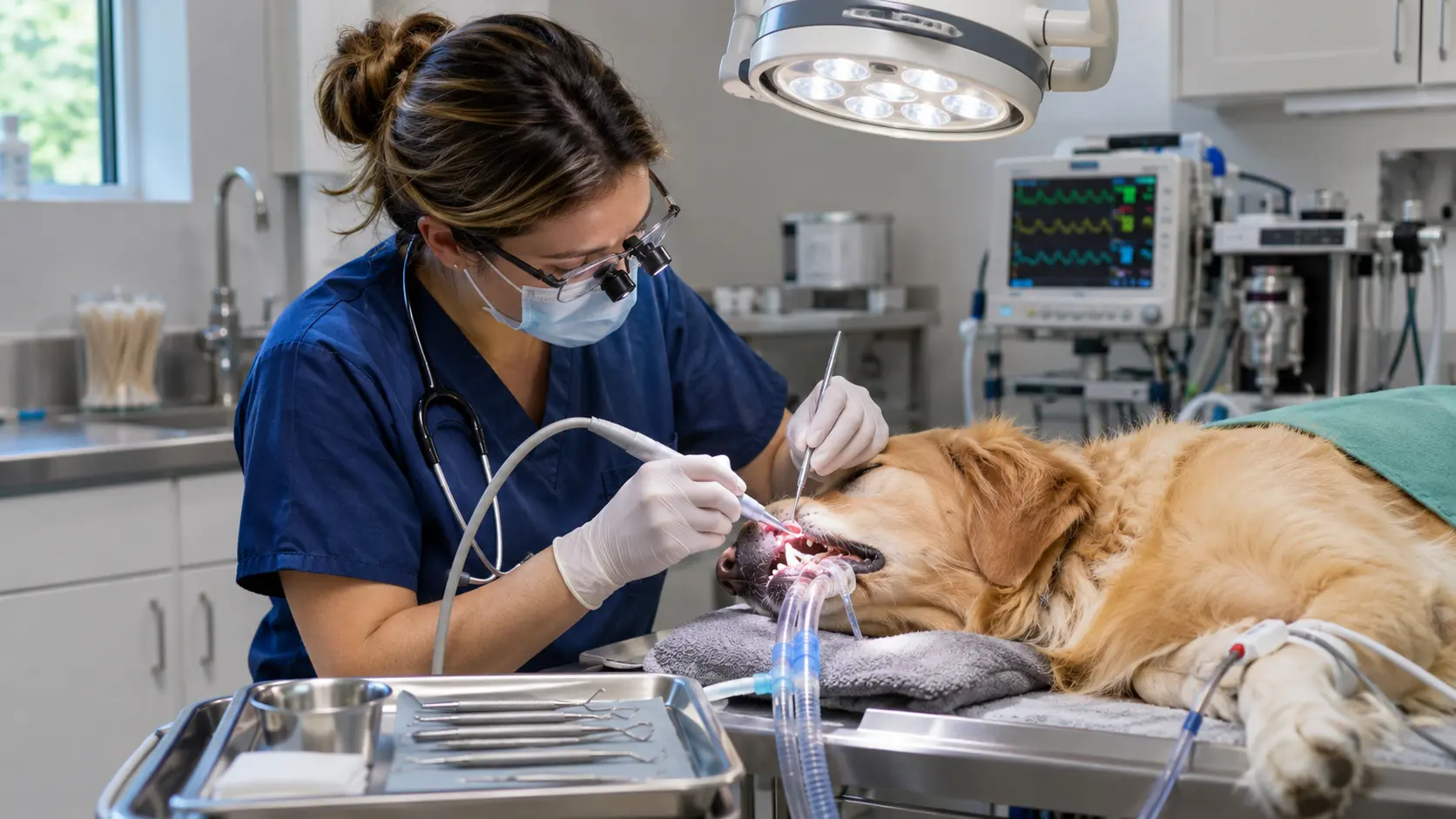
Pet dental cleaning costs vary by clinic, location, and your pet’s dental health. According to CareCredit’s 2026 report, the average cleaning costs $388 for dogs and $375 for cats. The price can increase if your pet needs dental X-rays or tooth extractions.
| Service (2026) | Dog | Cat |
| Regular dental cleaning | $307–$702 | $300–$682 |
| Average cleaning cost | $388 | $375 |
| Dental X-rays | $187 average | Varies by clinic |
| Bloodwork before anesthesia | Varies by clinic | Varies by clinic |
| Simple tooth extraction (per tooth) | $62–$142 | Varies by procedure |
| Complex tooth extraction (per tooth) | $130 average | Varies by procedure |
| Cleaning with multiple extractions | Can exceed $2,000 | Can exceed $2,000 |
Note: Prices are based on CareCredit’s published reports. X-ray and extraction figures are for dogs, and costs for complicated cases are not standard prices. Your vet can provide a more accurate estimate.
Before scheduling, ask your vet whether the price includes bloodwork, IV fluids, X-rays, pain medication, and anesthesia monitoring. Some clinics include these services, while others charge extra.
Location also affects the price. Dental cleaning often costs more in California and New York than in lower-cost states. If you live in California, comparing affordable pet insurance options can help you plan for covered veterinary expenses.
In Texas, the average cleaning costs $344 for dogs and $350 for cats. However, cheap pet insurance in Texas depends on your pet’s breed, age, and the deductible you choose. Most basic pet insurance plans do not cover routine dental cleaning.
Dog Dental Insurance vs Cat Dental Insurance
The policy rules are mostly the same for both species. What changes is the kind of dental problem each is likely to have, and that affects both the bill and whether coverage kicks in. Dental cleaning pet insurance also looks different on a small terrier than on a Great Dane, because anesthesia dosing and procedure time rise with body size.
Dog dental insurance
Small and flat-faced breeds often have crowded teeth, which traps tartar and raises the odds of periodontal disease and extractions early in life. Large dogs usually cost more per cleaning because anesthesia scales with weight. Dogs also fracture teeth chewing hard objects, and whether an insurer pays for that depends on whether it counts as an accident.
Cat dental insurance
Cats hide mouth pain well, so dental disease often surfaces late. Tooth resorption, where the tooth structure breaks down, is among the more common feline dental problems and often requires extraction. Because cats are frequently diagnosed after years of silent trouble, an insurer reviewing records may find earlier notes and call the condition pre-existing. A clean dental exam on file at enrollment helps.
Pet Dental Insurance Plans: What to Compare Before You Choose

An accident-and-illness plan, a plan with a wellness add-on, and a vet clinic’s own dental package can all be labeled “dental coverage,” yet they pay very differently. Put the policies you are considering side by side on the points below.
- Reimbursement percentage: 70%, 80% and 90% options change a $1,200 extraction bill by hundreds of dollars.
- Deductible type: annual deductibles reset each year, while per-condition deductibles can apply again to each new problem.
- Annual limit: unlimited, or capped at a set dollar figure.
- Wellness sub-limit for cleaning: the dollar amount, not just the word “included.”
- Waiting periods: for illness, for orthopedic issues, and for any dental-specific provision.
- Exam requirements: whether you must document a yearly dental check.
- Exclusions: cosmetic procedures, anesthesia-free cleaning, and pre-existing conditions.
Premium alone is a poor guide, since the cheapest policy is often the one with the lowest cap or the strictest exclusions. Two plans priced within a few dollars of each other can look very different once you read the dental terms, and the pet insurance plans compared in California show that gap clearly on deductibles, annual limits and exclusions.
Pet Dental Claim Reimbursement: Step by Step
Filing is straightforward once you know what the insurer needs. Most claims stall on missing records, not on the coverage decision itself.
- Get the written estimate first – Ask your vet to itemize the cleaning, anesthesia, X-rays and any extractions separately, since each line may be treated differently.
- Pay the vet and keep the itemized invoice – Most US insurers reimburse after you pay, though a few offer direct payment to the clinic.
- Request the medical records and dental chart – The diagnosis is what moves a claim from “routine” to “dental illness.”
- Submit within the insurer’s deadline – Claim windows often run from 90 days to a year, but each insurer sets its own.
- Check the explanation of benefits – It shows how the deductible, percentage and limit were applied to each line.
- Appeal a denial in writing – If a denial cites “pre-existing,” ask for the specific record they relied on.
Reimbursement timing varies by insurer. Many pay within a few days to a couple of weeks once the file is complete, but a missing record can stretch that to a month or more. The steps for how to file a pet insurance claim are similar across most companies, and dental claims add one extra requirement. With dental cleaning pet insurance, the vet’s written diagnosis and dental chart often decide whether the visit is treated as routine care or as covered dental illness.
Is Dental Cleaning Pet Insurance Worth It?
Whether pet dental insurance is worth it depends on the coverage you choose and your pet’s dental needs. A wellness plan may help with routine cleaning costs, while regular pet insurance with dental illness coverage can help pay for unexpected dental treatments. Here are two simple examples to explain the difference.
Example 1: Wellness Plan for Routine Cleaning
Suppose you pay $25 per month, or $300 per year, for a wellness add-on. Your dog’s dental cleaning costs $450, but the plan only covers $150. In this case, you spend $300 on the plan and receive $150 toward cleaning. The plan may be worth the cost if you also use other benefits, such as vaccinations, bloodwork, and annual checkups.
Example 2: Pet Insurance for Dental Treatment
Suppose your dog needs dental cleaning and tooth extractions costing $1,200. Your insurance has a $250 deductible and covers 80% of eligible expenses. After paying the deductible, the remaining amount is $950, and your insurer pays $760. You pay $440 out of pocket, plus your regular insurance premiums. This example assumes the treatment is covered and you have not already met your deductible.
A wellness plan can help you manage regular dental expenses, but it may not save money if you rarely use its benefits. You could also set aside $35 per month, or $420 per year, for future dental care. However, if your pet needs an expensive dental procedure costing $1,500 or more, insurance that covers dental illness may be more useful. Before choosing a plan, compare the premiums, deductibles, coverage limits, and exclusions to see what fits your budget.
FAQs
Is dental disease a pre-existing condition?
It can be. If a vet recorded signs of dental disease before your coverage began or during the waiting period, the insurer may treat later dental treatment as pre-existing. Definitions differ by insurer, so ask for theirs in writing.
How much does a dog's dental cleaning cost?
A routine anesthetic cleaning for a dog typically costs about $300 to $800 in the US before extractions, with a commonly cited national average near $388. Extractions, X-rays and bloodwork raise the total, and a cleaning with several extractions can pass $1,500.
How long does pet dental claim reimbursement take?
It varies by insurer. Many pay within several days to two weeks once they have the invoice and medical records, but missing documents are the most common cause of delay.
Can I add a wellness plan after I buy a policy?
Some insurers allow it at enrollment or at renewal, and some only at the time of purchase. Ask your insurer directly, since this rule is set by each company.

Aarvith is the author and founder of Insurance Centrik. He researches various insurance topics, including auto, health, travel, home, and business insurance. He provides accurate insurance information from reliable sources and industry expertise.