

Finding the right life insurance Companies in Philadelphia aren’t just about choosing the first name you recognize. Rates, coverage types, and customer service can vary a lot from one insurer to the next, and the “best” company really depends on your age, health, budget, and what you’re trying to protect against.
Philadelphia’s insurance market is competitive enough that most major national carriers operate here alongside a few insurers with deep regional roots, like Penn Mutual. That’s actually good news for buyers, since more competition tends to mean more flexible pricing and a wider range of policy structures to choose from. The challenge is sorting through them without spending weeks on the phone with agents.
To make that easier, the team at Insurance Centrik put together a breakdown of ten insurers that consistently show up as strong options for Philadelphia residents, what actually makes each one worth considering, and the practical factors that should guide your final decision.
1. State Farm
State Farm remains one of the most recognizable names in insurance for a reason: local agents. Philadelphia has no shortage of State Farm offices, which matters if you’d rather sit down with someone than fill out a form online. Their term policies are flexible in length, and if you want coverage that lasts your entire life, their whole and universal life products give you room to adjust as your needs change.
What tends to stand out with State Farm is bundling. If you already have auto or home coverage with them, adding life insurance often comes with a discount, and managing everything through one agent simplifies renewals and claims. It’s a solid pick if you value convenience and an established local footprint over chasing the absolute lowest premium.
2. Northwestern Mutual
Northwestern Mutual leans heavily into long-term financial planning, not just life insurance. Their whole life policies build cash value you can borrow against later, and their advisors typically look at your life insurance as one piece of a bigger retirement and savings picture. This makes them a good fit if you want a single company managing more than just your death benefits.
The tradeoff is that Northwestern Mutual’s policies tend to sit on the pricier end, and their advisory approach works best if you’re comfortable with a longer consultation process rather than a quick online quote. For buyers who want their life insurance tied into retirement accounts, dividend-paying whole life, and college savings planning under one roof, that extra time upfront usually pays off.
3. New York Life
Few insurers have the track record New York Life does—it’s one of the oldest mutual insurers in the country. Whole life policies here come with guaranteed death benefits and cash value growth, while term coverage stays simple and reasonably priced. Their financial ratings are consistently strong, which matters more than people realize when you’re trusting a company to pay out decades from now.
New York Life also offers a fairly wide network of agents throughout the Philadelphia area, so getting a policy reviewed in person isn’t difficult. Their customizable riders, including options for long-term care and disability income, appeal to buyers who want one policy to flex around several future scenarios rather than stacking separate products.
4. Penn Mutual
Penn Mutual has genuine Philadelphia roots, which shows up in how the company operates locally. Whole life policies include potential dividend payments, and term options are priced competitively for shorter coverage windows. If working with a company that has an actual local presence matters to you, Penn Mutual is worth a closer look.
Because the company is headquartered just outside the city, in Horsham, its agents tend to have a genuinely local understanding of Philadelphia-area pricing and needs, rather than reciting national averages. Their indexed universal life products also give buyers a middle ground between the guarantees of whole life and the growth potential tied to market performance.
5. Colonial Penn
If you’re over 50 and worried about qualifying for life insurance, Colonial Penn is known for its guaranteed acceptance policies. These plans don’t require a medical exam, and premiums stay the same as you get older. However, they usually offer lower coverage amounts, making them a better fit for covering final expenses rather than providing a large death benefit.
Because whole life insurance rates for seniors can vary from one insurer to another, it’s a good idea to compare quotes before choosing a policy. This allows you to see how Colonial Penn’s premiums and coverage compare with other guaranteed acceptance and simplified issue life insurance options, helping you find the best value for your needs.
This type of policy works well as part of a broader retirement plan rather than your only source of coverage. Many retirees in Philadelphia choose guaranteed acceptance life insurance to help cover final expenses while relying on Medicare, supplemental health insurance, and personal savings to manage medical costs and protect their family’s financial future.
6. Prudential
Prudential covers a lot of ground term, universal, and variable life policies, the last of which lets you direct cash value into investment options. That flexibility appeals to people who want their policy to do more than sit there, though variable life does carry more risk than a standard whole life policy.
Prudential’s online tools are also worth a mention. Their calculators and planning resources make it easier to model out different coverage amounts and premium structures before ever talking to an agent, which suits buyers who like to do their own research first.
7. AIG
AIG’s global scale means both individuals and businesses can find coverage here, including group life insurance for employers. Term and universal life products are the main draw for individual buyers, and the company’s financial strength gives some peace of mind if you’re looking at larger policies.
Philadelphia small business owners in particular tend to gravitate toward AIG for key-person insurance or buy-sell agreements, since the company has more experience structuring business-focused life insurance than most of the purely consumer-facing insurers on this list.
8. Mutual of Omaha
Mutual of Omaha keeps things simple, which is exactly what a lot of buyers want. Term policies are affordably priced and easy to understand, and their simplified issue options skip the medical exam for people who don’t want to deal with lab work or wait weeks for approval.
Approval times are usually faster here than with traditional fully underwritten policies, which makes Mutual of Omaha a common choice for people who want coverage in place quickly, whether that’s for a new mortgage requirement or simply peace of mind after a life change.
9. Nationwide
Nationwide’s lineup covers term, whole, and universal life, with the flexibility to adjust universal life coverage as circumstances change. Financial ratings are solid, and customer service is generally accessible, making this a reasonable middle-of-the-road choice for Philadelphia families.
One detail worth knowing: Nationwide often bundles life insurance discounts with existing auto or home policies, similar to State Farm. If you’re already a Nationwide customer for other coverage, it’s worth asking about combined pricing before shopping elsewhere.
10. Farmers Insurance
Farmers built its reputation on local agent relationships rather than pure online convenience. If you’d rather talk through your options with someone who knows the Philadelphia market, their term, whole, and universal life plans come with the kind of hands-on support that’s harder to find with bigger national carriers.
Quick summary what Farmers offers:
- Term life insurance for affordable, short-term protection
- Whole life coverage that builds cash value over time
- Universal life with adjustable premiums and benefits
- A strong local agent network for in-person support
Philadelphia Life Insurance Cost & Reviews Compared
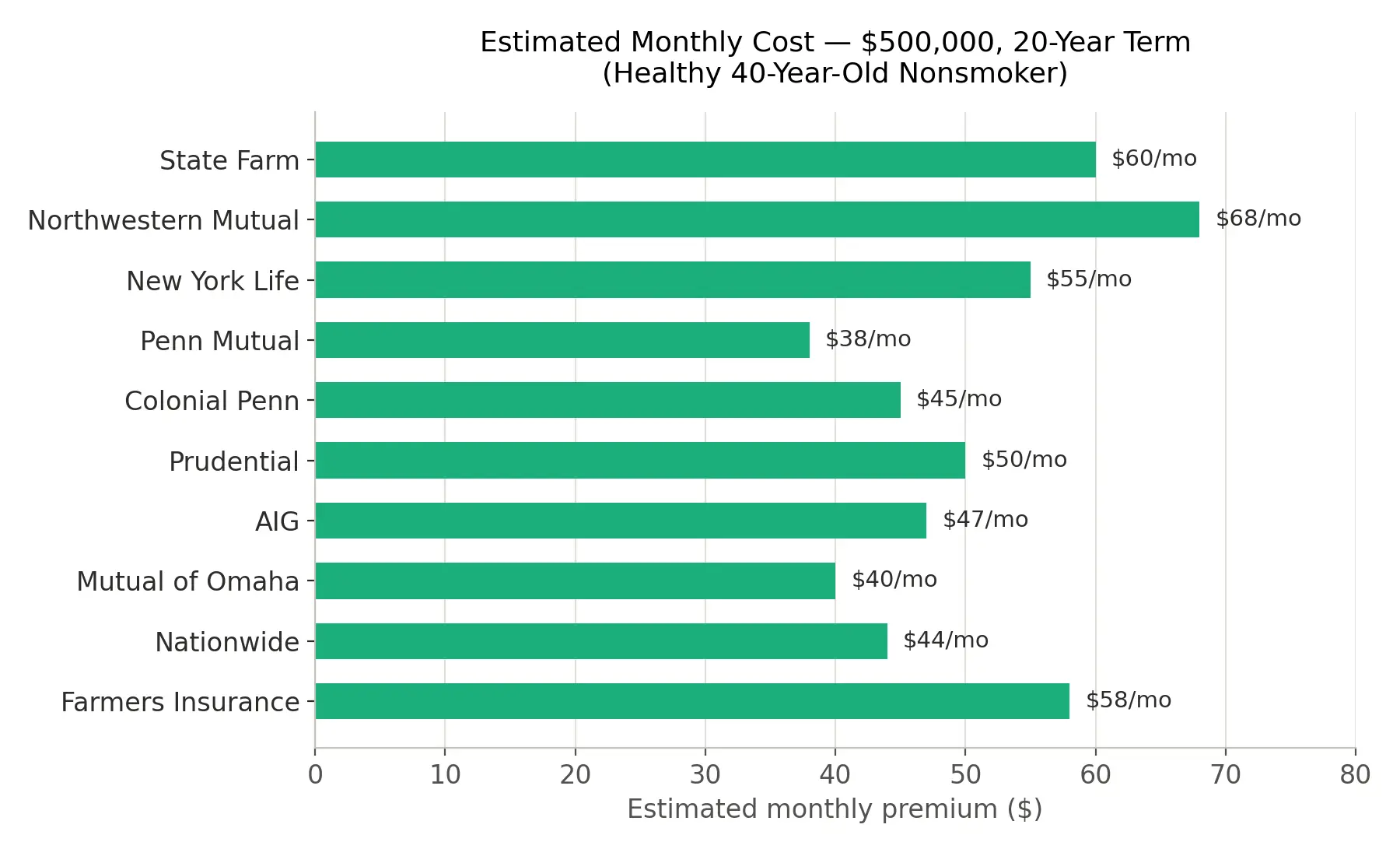
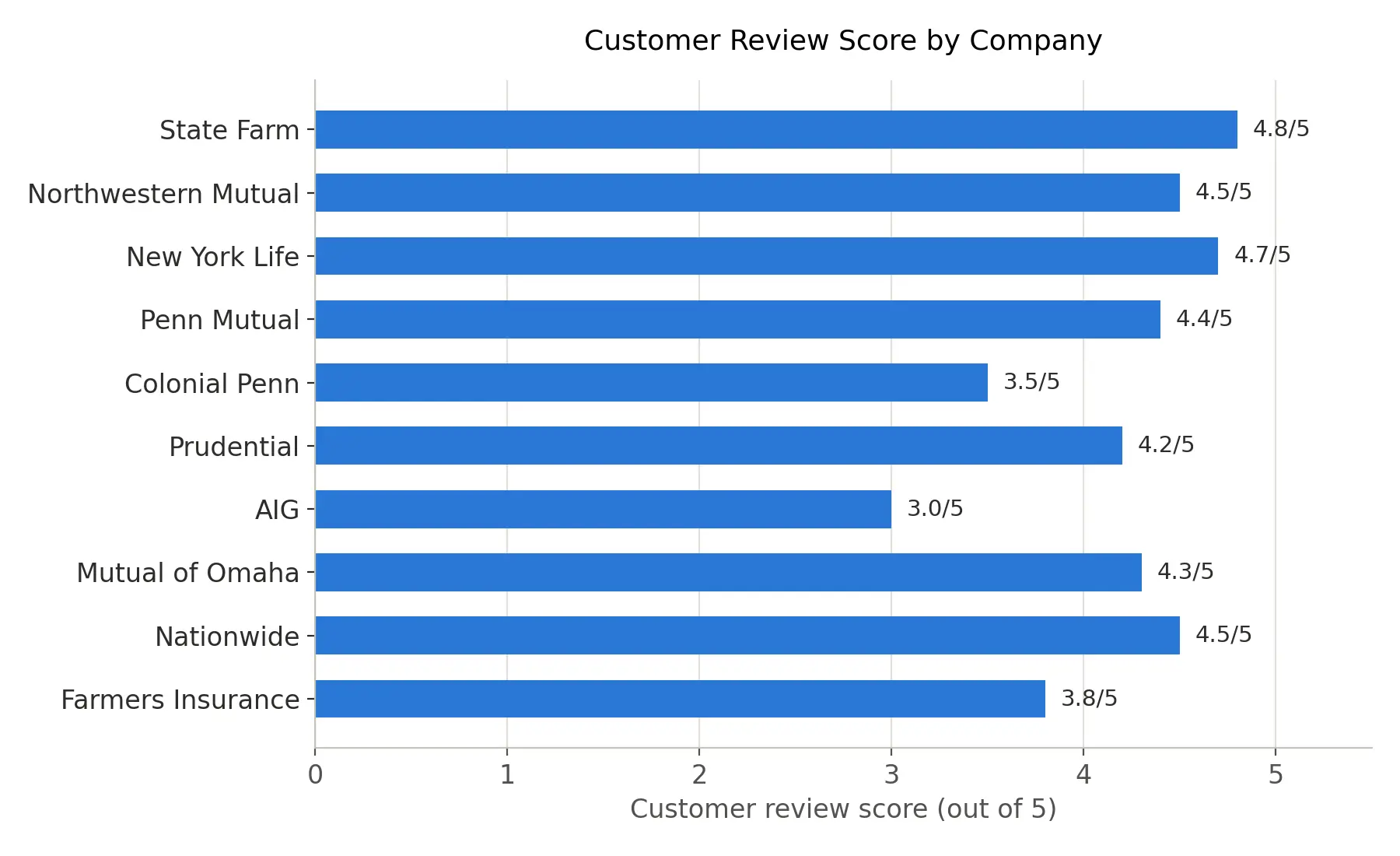
Comparing prices before buying life insurance can save you thousands over time. This chart breaks down estimated monthly premiums and real customer review scores for Philadelphia’s top 10 insurers, helping you spot the most affordable, highest-rated option for your family’s needs instantly.
What Affects Life Insurance Costs in Philadelphia
Premiums aren’t set the same way everywhere, and a few local and personal factors tend to move the needle more than people expect.
Age and Health at the Time of Application
This is still the single biggest factor. Locking in a policy earlier, even by a few years, usually means significantly lower lifetime premiums, since rates are largely based on life expectancy at the time you apply.
Coverage Amount and Policy Length
A 20-year term policy for $500,000 costs less than a 30-year term for the same amount, simply because the insurer is on the hook for a shorter window. Matching the term length to how long you actually need coverage, rather than defaulting to the longest option, keeps costs down.
Smoking and Lifestyle Factors
Tobacco use, high-risk occupations, and certain hobbies can meaningfully raise premiums across every insurer on this list, since they directly affect underwriting risk.
Existing Health Coverage
Insurers sometimes ask about your current health insurance status during underwriting, since it can be an indicator of how consistently you access preventive care. Keeping steady health insurance in place, separate from your life insurance policy, can also mean fewer surprises during the medical underwriting process if a life policy ever requires an exam.
How to Actually Choose Between Them
Premium price is the first thing most people look at, and it shouldn’t be the last. Here’s what else deserves a closer look before you sign anything.
Financial Strength Ratings
Check ratings from A.M. Best, Moody’s, or Standard & Poor’s before committing. A high rating means the company is well-positioned to pay claims decades from now, not just today.
Policy Type Fit
Term life is cheaper and works well if you need coverage for a specific window, like until your mortgage is paid off or your kids are through college. Whole and universal life cost more but last your entire life and builds cash value. Neither is objectively “better” — it depends on what you’re solving for.
Local Access
Some people genuinely want a face-to-face conversation, especially when reviewing or changing a policy years later. Companies like Penn Mutual, State Farm, and Farmers Insurance have a strong on-the-ground presence in Philadelphia, while others lean more digital.
Riders and Add-Ons
Look at what riders are available — accelerated death benefits, critical illness coverage, or accidental death protection can matter a lot depending on your health history and family situation.
Reviews and Claims Experience
A company’s rating means little if actual policyholders report a painful claims process. Search for recent reviews specifically about claims handling, not just sales experience, since sales reviews and claims reviews often paint very different pictures of the same company.
How Coverage Fits Your Bigger Financial Picture
Life insurance rarely exists in isolation. Before finalizing a policy, it’s worth stepping back and looking at how it fits alongside your other coverage, including health insurance, disability insurance, and any employer-provided benefits. A death benefit that looks generous on paper can fall short if your family is also facing ongoing medical expenses or gaps in other coverage, so it helps to view life insurance as one part of a broader protection plan rather than a standalone purchase.
Finding the Right Coverage for Your Needs
Choosing a life insurance policy is a personal decision, and the right choice depends on your needs, budget, and future plans. Some people want affordable coverage for a certain number of years, while others prefer lifelong protection that can also build cash value. Understanding your goals is the first step toward finding a policy that works for you.
Before you buy, compare quotes from a few trusted life insurance companies in Philadelphia. Look beyond the monthly premium and review the company’s financial strength, customer service, policy options, and available riders. Taking a little extra time to compare your choices can help you find reliable coverage that protects your loved ones and gives you confidence in your financial future.
FAQs
Do I Need a Medical Exam to Get Life Insurance?
Not always. Many insurers offer no-medical-exam or simplified issue policies. These plans are convenient but may have lower coverage limits or higher premiums compared to fully underwritten policies that require a health assessment.
Can I Switch Life Insurance Companies Later?
Yes. You can replace your existing policy if you find better coverage or lower premiums. Before switching, compare policy benefits, surrender charges, and your current health, as changes may affect your eligibility and rates.
Can I Buy Life Insurance Online in Philadelphia?
Yes. Many major insurance companies allow you to compare quotes, apply online, and receive approval digitally. However, depending on the policy type and coverage amount, some applications may still require additional underwriting or documentation.
What Factors Affect Life Insurance Rates in Philadelphia?
Life insurance premiums are primarily based on your age, health, tobacco use, coverage amount, policy type, occupation, and lifestyle. Buying coverage while you're younger and healthier usually results in lower long-term premium costs.

Aarvith is the author and founder of Insurance Centrik. He researches various insurance topics, including auto, health, travel, home, and business insurance. He provides accurate insurance information from reliable sources and industry expertise.