

Dental needs often change with age. A person who once needed only routine cleanings may later require crowns, periodontal treatment, dentures, a root canal, or replacement of older dental work. These treatments can become expensive quickly, which is why many older adults begin comparing Dental Insurance for Seniors in Texas before a major procedure becomes necessary.
One concern comes up repeatedly during that search: waiting periods. Some dental policies begin covering preventive care right away but delay benefits for basic or major services for several months. For a senior who already knows a crown, bridge, denture, or other treatment may be needed soon, that delay can make a policy far less useful.
Dental insurance with no waiting period can help address that issue by making certain covered benefits available once the policy becomes effective. However, immediate eligibility should not be confused with full payment. Deductibles, coinsurance, annual maximums, provider networks, exclusions, and procedure-specific restrictions can still affect how much the insurance company actually pays.
Dental Insurance With No Waiting Period
Dental insurance with no waiting period means you do not have to complete a set waiting period before becoming eligible for benefits on the services listed as immediately covered under the policy. Depending on the plan, this may include preventive care, basic dental work, and sometimes major services.
For Texas seniors, the most important part is identifying exactly which services receive immediate coverage. A plan may advertise no waiting period while still limiting benefits for expensive treatment through lower first-year coverage percentages, annual maximums, missing-tooth clauses, replacement rules, or network restrictions.
When comparing senior dental insurance in Texas, pay particular attention to:
- Preventive, basic, and major service coverage
- Waiting periods for each treatment category
- Monthly premiums
- Annual deductibles
- Maximum yearly benefits
- Coinsurance percentages
- PPO or HMO network requirements
- Crown, denture, bridge, and implant benefits
- Replacement limitations
- Missing-tooth provisions
- Out-of-network coverage
A no-waiting-period policy can be useful, but its value depends on the entire benefit structure rather than one attractive feature.
What Is Dental Insurance With No Waiting Period?
A dental insurance waiting period is a period of time between the effective date of your coverage and the date when benefits become available for certain procedures. Dental plans often treat services differently, which means you could receive preventive benefits immediately while being required to wait before the policy contributes toward more expensive treatment.

For example, a plan may begin covering eligible exams and routine cleanings as soon as coverage starts but require a waiting period before benefits become available for a crown or bridge. A no waiting period dental insurance Texas plan may remove that delay for some or all covered services, depending on the policy.
Immediate coverage does not mean the insurance company automatically pays the entire dental bill. If a crown is covered at 50%, the policy may begin providing that benefit immediately, but you could still be responsible for the remaining share, a deductible, any amount above the insurer’s allowed charge, and expenses that exceed your annual benefit maximum.
This is why seniors should look beyond phrases such as “coverage starts immediately.” The policy’s schedule of benefits, exclusions, annual maximum, network requirements, and treatment limitations usually matter just as much as the waiting-period rules.
Why No Waiting Period Matters for Texas Seniors
Older adults often have more complex dental needs than people who primarily use dental coverage for routine preventive care. Aging restorations, gum problems, tooth loss, worn crowns, and denture maintenance can all increase the chance that more expensive dental treatment will eventually be needed.
Imagine that your dentist has been monitoring an older crown and believes it may need replacement within the next year. If you enroll in a policy with a twelve-month waiting period for major services and the crown breaks after three months, the treatment may not yet qualify for the plan’s major-service benefit.
A policy offering immediate dental coverage for seniors may reduce that risk, but it still needs to be compared carefully. A plan with immediate coverage but a very low annual maximum could provide less financial help than another plan with stronger overall benefits.
The best decision usually comes from comparing the timing of your expected dental work with the plan’s actual costs and benefit limits.
How Dental Insurance for Seniors in Texas Works
Understanding how Dental Insurance for Seniors in Texas is structured makes comparing plans much easier. Rather than focusing only on the monthly premium, look at how all parts of the policy work together.
Monthly Premium
The premium is the amount you pay to keep your dental insurance active. Dental premiums can vary based on the insurer, coverage level, ZIP code, network type, and number of people enrolled.
A lower monthly premium may work well for someone who expects only routine preventive care. However, a low-cost policy may also have lower annual benefits, smaller coverage percentages, or more limitations on major treatment.
Before choosing a plan because it costs less each month, estimate what you may actually spend over the full year.
Annual Deductible
A deductible is the amount you may need to pay toward eligible services before the insurance company starts paying its share. Some policies waive the deductible for preventive services, while others apply deductibles differently depending on the type of treatment.
The deductible itself may seem small compared with the cost of a crown or denture, but it should still be included when estimating your total annual dental expenses.
Annual Maximum Benefit
The annual maximum is one of the most important figures to check when comparing dental plans for seniors in Texas. It generally refers to the maximum amount the insurer will pay toward covered dental services during a benefit year.
Once the insurance company reaches that maximum, you are usually responsible for additional dental costs until the next benefit period begins.
This means a plan offering immediate major-service coverage may still leave you with substantial out-of-pocket costs if the annual maximum is low.
Coinsurance
Coinsurance determines how the cost of a covered procedure is divided between you and the insurance company.
Dental policies often place procedures into preventive, basic, and major categories. Preventive treatment may receive the highest coverage percentage, while major restorative work may receive a lower percentage.
For example, a plan could pay a higher share for routine exams than for crowns or dentures. Actual percentages vary by policy, so the schedule of benefits should always be checked before enrollment.
Dental Network
Dental networks can have a significant effect on how much you pay.
PPO dental plans generally include a network of participating dentists who have agreed to negotiated rates. Some PPO plans may also provide out-of-network benefits, although your share of the cost can be higher.
HMO or DHMO plans usually require members to use participating providers and may offer a different fee structure.
If you want to keep your current dentist, verify participation with both the insurance company and the dental office before enrolling.
Dental Insurance Waiting Period: What Seniors Should Check
A dental insurance waiting period does not always apply equally to every dental procedure. Preventive care may start immediately while other treatments are delayed for several months.
That difference matters because the procedures most likely to create large out-of-pocket expenses are often major restorative treatments.
Before enrolling, review the policy rules for:
- Crowns
- Root canals
- Periodontal treatment
- Bridges
- Dentures
- Denture replacement
- Oral surgery
- Dental implants
Do not assume that a plan advertising “no waiting period” provides immediate benefits for every item on this list. Some plans may waive the waiting period only for applicants who had previous dental insurance, while others may provide immediate eligibility to all new members.
Another detail worth checking is whether first-year benefits are reduced. A policy could technically have no waiting period while still paying a smaller percentage during the first year.
What Services May Be Covered Immediately?
The services available without a waiting period depend on the individual plan. Insurers may classify procedures differently, so the same treatment could be considered basic under one policy and major under another.
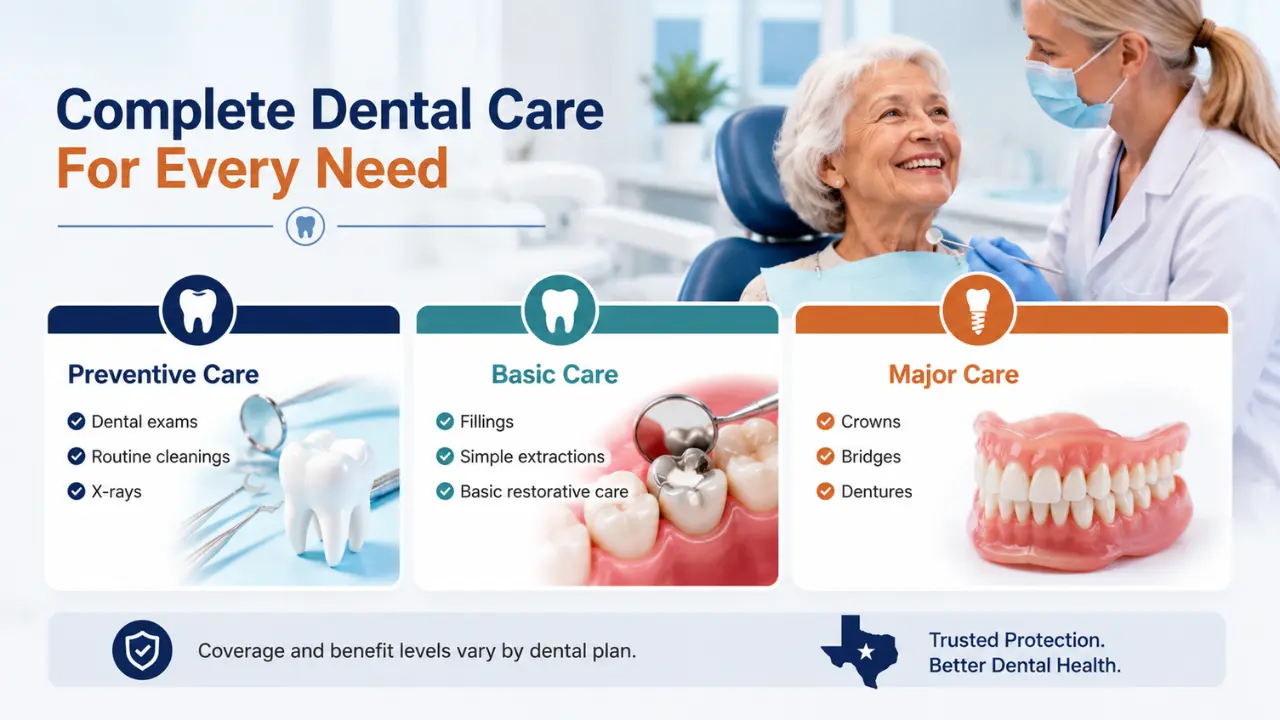
Preventive Dental Care
Preventive services usually include routine exams, cleanings, and certain X-rays. These treatments often receive the most favorable coverage because regular dental visits can identify problems before they become more expensive to treat.
Even when preventive care is covered immediately, frequency limits can still apply. A policy may limit how often it pays for cleanings, examinations, or specific types of X-rays.
Basic Dental Services
Basic dental treatment can include fillings and some types of extractions. However, plan classifications vary, which is why seniors should verify how a specific insurer categorizes each procedure.
A plan with immediate basic-service benefits can be particularly useful if you are concerned about small dental problems developing into more complicated treatment.
Major Dental Services
Major services are especially important when comparing dental insurance for seniors over 65, because these treatments can be expensive.
Depending on the policy, major care may include crowns, bridges, dentures, root canals, oral surgery, and other restorative procedures. Even when no waiting period applies, the policy may cover only a portion of the approved cost.
If major treatment is the main reason you are shopping for insurance, read this section of the policy carefully.
Dental Implant Coverage
Implants require even more careful review because coverage varies widely between dental plans. Some policies may provide implant benefits, while others exclude them or place limits on related procedures.
Implant treatment can also involve several separate services, such as extraction, bone grafting, implant placement, abutment placement, and restoration. An insurer may not treat all of these services the same way.
If you specifically need dental implant insurance for seniors, confirm what part of the procedure is covered before enrolling.
Estimated Dental Insurance Costs for Texas Seniors
There is no single statewide premium for Texas senior dental plans because prices vary by ZIP code, carrier, plan design, network, benefit level, and other factors.
For budgeting purposes, seniors may see individual dental plans priced anywhere from relatively inexpensive basic coverage to significantly higher monthly premiums for richer benefits. The figures below should be treated as broad planning estimates rather than guaranteed quotes.

| Plan Feature | Illustrative Range or Structure |
| Monthly premium | About $20–$70+ per person |
| Annual premium | About $240–$840+ |
| Individual deductible | Often $0–$100 |
| Preventive care | Usually the highest coverage percentage |
| Basic services | Commonly partial coverage |
| Major services | Often a lower percentage than preventive care |
| Annual maximum | Often around $1,000–$2,500+ |
| Waiting period | None to several months, depending on service |
Actual pricing can fall above or below these ranges. The best way to determine your cost is to request current quotes using your Texas ZIP code and compare the benefit details alongside the premium.
The most useful comparison is not simply which plan has the lowest monthly price. A better question is how much you could realistically spend over the year after premiums, deductibles, coinsurance, and treatment costs are added together.
Why the Cheapest Premium May Cost More
| Feature | Lower-Cost Example | Immediate-Coverage Example |
| Monthly premium | $28 | $48 |
| Annual premium | $336 | $576 |
| Major-service waiting period | 12 months | No waiting period |
| Annual maximum | $1,000 | $2,000 |
| Major-service benefit | 50% after waiting period | 50% immediately |
| Dentist network | In-network care | In-network care |
Note: These figures are hypothetical and are included only to explain how premiums, waiting periods, and annual maximums can affect overall value. They are not quotes from specific insurers.
If a senior expects only routine cleanings, Plan A may provide acceptable value even though major services have a waiting period. Paying the higher premium for Plan B may not produce much extra value if expensive treatment is unlikely.
The situation changes if the same person has an older crown that may soon need replacement. In that case, the higher premium for Plan B could potentially be justified because major-service benefits are available immediately and the annual maximum is higher.
This example is only meant to show how plan design affects total value. Actual benefits depend on the policy’s terms, allowed charges, deductible, annual maximum, network, and treatment eligibility.
How to Compare No-Waiting-Period Dental Plans
Finding the right Dental Insurance for Seniors in Texas is easier when you compare plans in a consistent order.
Step 1: Start With Your Dental Needs
Think about the care you are likely to need over the next twelve months. If you recently had a dental exam, review the treatment plan your dentist provided.
Possible needs could include routine cleanings, fillings, periodontal care, crowns, root canals, dentures, bridges, or implants.
A senior expecting only preventive care should evaluate plans differently from someone who already knows expensive treatment is likely.
Step 2: Check Waiting Periods by Procedure
Do not assume a policy has immediate coverage for every service simply because the marketing page says there is no waiting period.
Check preventive, basic, and major services separately. If you need a specific procedure, confirm that exact treatment.
Step 3: Review First-Year Benefits
Some plans increase their benefits after you have been enrolled for a certain amount of time.
A policy could offer immediate eligibility but provide lower first-year coverage for major procedures. If you expect dental work soon, this can materially affect what you pay.
Step 4: Compare the Annual Maximum
The annual maximum can determine how useful a policy is during a year with several dental procedures.
If a policy pays up to $1,000 per year and you need multiple crowns or other major treatment, the benefit could be exhausted quickly.
Step 5: Verify the Dentist Network
If you want to continue seeing your current dentist, check whether the office participates in the plan.
It is also a good idea to verify the information directly with the insurer because provider participation can change.
Step 6: Read Procedure-Specific Rules
Look for restrictions involving crowns, dentures, missing teeth, bridges, implants, periodontal treatment, and replacement frequency.
These details often have a larger financial impact than the waiting-period language itself.
Step 7: Estimate Your Total Cost
Add together the annual premium, expected deductible, estimated coinsurance, non-covered expenses, and any costs that could exceed the annual maximum.
This gives you a much more realistic way to compare affordable dental insurance for seniors than looking at premium alone.
PPO and HMO Dental Insurance for Texas Seniors
Understanding PPO and HMO Dental Insurance can help seniors decide whether provider flexibility or predictable network pricing matters more.
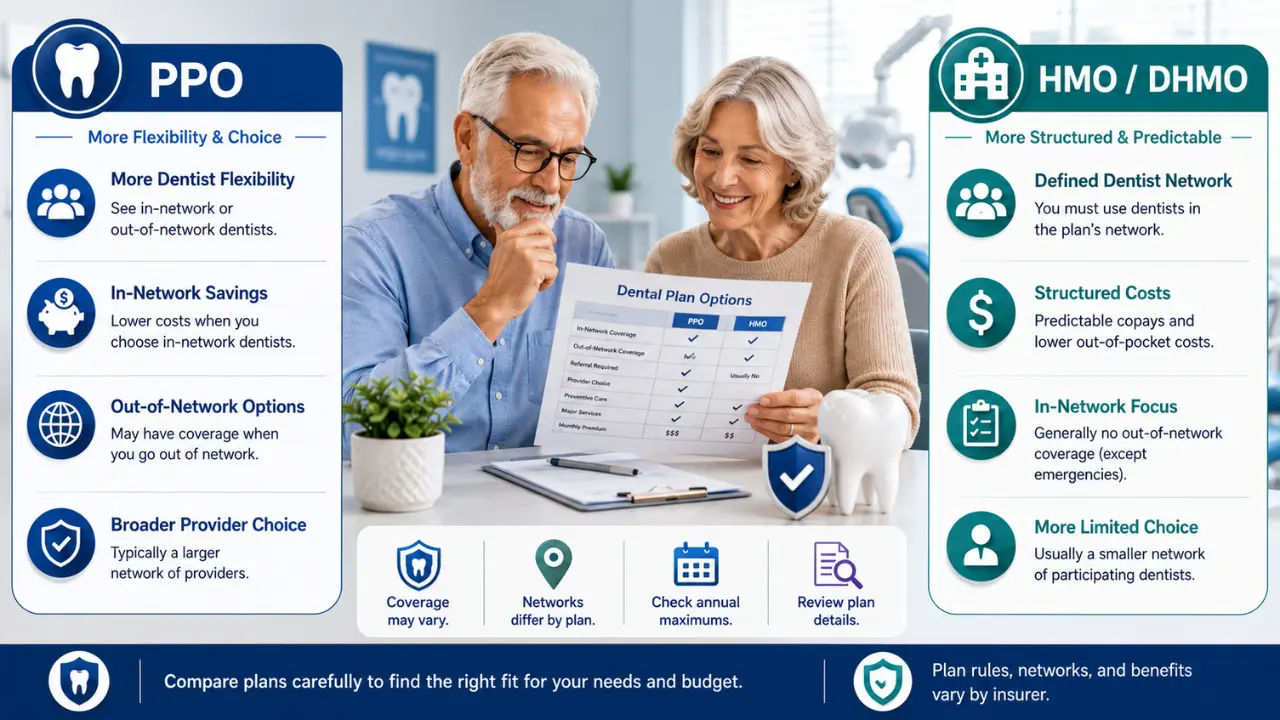
PPO – PPO plans generally give members access to a network of participating dentists and may allow some out-of-network care. Staying in the network can reduce costs because the insurer has negotiated rates with participating providers.
HMO or DHMO – HMO or DHMO plans usually require members to receive covered services from participating dentists. These plans may have lower premiums or more predictable fee schedules, but the provider network can be more restrictive.
Neither structure is automatically better. A senior who wants to continue seeing a long-time dentist may prefer a PPO if the provider participates. Someone who is comfortable choosing a network dentist may prefer the cost structure of an HMO-style plan.
Does Medicare Cover Dental Care for Seniors in Texas?
Medicare and private dental insurance are separate forms of coverage, and understanding the difference is important before buying an additional dental policy.
Original Medicare generally does not cover routine dental services such as regular cleanings, fillings, dentures, and most ordinary tooth extractions simply because they are dental procedures. There are limited situations in which certain dental services may be covered when they are closely connected to medically necessary treatment.
Some Medicare Advantage plans include dental benefits, but those benefits vary by plan. They may have their own provider networks, annual allowances, service limits, or coinsurance requirements.
If you already have dental benefits through Medicare Advantage, compare them carefully with any separate senior dental plan before paying for additional coverage.
What About Dental Discount Plans?
Dental discount plans are sometimes marketed alongside insurance, but they work differently.
A discount plan generally gives members access to reduced fees from participating dentists. Instead of the insurance company paying a percentage of an eligible claim, the patient usually pays the discounted charge directly to the dental office.
These programs can appeal to people who want access to discounted rates without traditional insurance waiting periods. However, the value depends heavily on the participating dentist network and the actual discounted fee schedule.
Before joining a dental discount plan, check the membership fee, available dentists, specialist participation, and discounted prices for the procedures you expect to need.
Are Dental Insurance Plans for Families Useful for Seniors?
Some households may be comparing Dental Insurance Plans for Families rather than purchasing separate individual policies.
A family plan can be convenient when several people need similar coverage, but it is not always automatically cheaper. Premiums, deductibles, annual maximums, and benefit limits may work differently depending on the plan.
A married couple with similar dental needs may prefer the simplicity of one plan. However, separate policies could make more sense when one person needs extensive restorative work and the other expects only routine preventive care.
The best option depends on the household’s actual dental needs rather than family enrollment alone.
Common Restrictions Seniors Should Review
Waiting periods receive a lot of attention, but other policy restrictions can have an even bigger effect on your out-of-pocket costs.
Missing-Tooth Clauses
Some plans may limit benefits for replacing a tooth that was already missing before the policy became effective.
This can be particularly important for seniors looking for dental insurance for dentures, bridges, or implants.
Replacement Frequency
Dental policies may limit how often they pay toward replacement crowns, dentures, bridges, or other restorations.
For example, a policy might not provide another benefit for a crown that was placed only a few years earlier.
Annual Maximums
Once the insurance company reaches the plan’s annual maximum, you may become responsible for additional dental expenses for the remainder of the benefit year.
This is especially important when several major procedures are expected.
Least-Cost Alternative Provisions
Some policies may base their payment on a less expensive covered treatment when several treatment options are available.
You may still be able to choose the more expensive option, but your insurance benefit may be calculated using the lower-cost alternative.
Network Restrictions
Strong coverage percentages are less useful if your preferred dentist does not participate and out-of-network benefits are limited.
Before enrolling, verify not only the dentist but also any specialist you may need.
Mistakes to Avoid When Buying Senior Dental Insurance
One common mistake is choosing a plan based only on the monthly premium. A lower premium may look attractive, but it does not tell you how much the plan will pay when you need treatment.
Another mistake is assuming that “no waiting period” means every dental service is immediately covered in full. In reality, benefit percentages, deductibles, annual maximums, exclusions, and treatment limitations can still apply.
Seniors should also avoid enrolling without checking the provider network. If your dentist is out of network, the plan may provide less value than expected.
Major procedures such as dentures, implants, crowns, and bridges should always be checked individually. Do not assume they are covered simply because a plan includes major dental benefits.
Finally, if your dentist has already recommended treatment, read the policy carefully before assuming a newly purchased plan will pay for it. Waiting-period rules are only one part of determining eligibility.
How Seniors Can Get More Value From Dental Coverage
Once you have dental insurance, using the plan carefully can help you get more from your benefits.
Start by using covered preventive services when appropriate. Routine examinations and cleanings can sometimes identify small problems before they become more expensive to treat.
Whenever possible, stay within the plan’s network if doing so provides access to negotiated rates. Before major dental work, ask your dentist for a written treatment plan and request a pre-treatment estimate or predetermination from the insurer when available.
If several non-urgent procedures are needed, ask your dentist whether treatment can safely be spread across benefit years. In some situations, this can allow you to use more than one year’s annual maximum. Dental health should always come first, so treatment should never be delayed solely for insurance reasons when the dentist believes it is clinically necessary.
Questions to Ask Before You Enroll
Before you pick a dental plan as a senior in Texas, it helps to ask each company the same set of questions. That way you can compare them fairly and avoid surprises later.
First, ask when your coverage actually starts. A lot of plans make you wait before they will pay for bigger dental work. So ask if there is a waiting period, and how long it lasts. Also ask if crowns, dentures, implants, bridges, root canals, or gum treatment are covered right from day one, or if you have to wait months for those.
Next, ask about the money side. What is the yearly maximum the plan will pay in your first year? Does that amount go up after the first year? What is the deductible, and how much of the cost does the plan cover for major work like crowns or dentures?
Ask if there is a missing tooth rule. Some plans will not pay to replace a tooth that was already missing before you joined. Also ask how often the plan will pay to replace things like dentures or bridges, since most plans only cover a replacement every few years.
Last, check with your own dentist. Ask if they are part of the plan’s network. And if you ever need a specialist, ask if one is close to where you live.
Choosing Dental Coverage That Fits Your Needs
Finding suitable Dental Insurance for Seniors in Texas requires more than searching for the lowest monthly premium. A plan should be judged by what it can realistically provide when dental treatment is needed.
No-waiting-period coverage can be valuable for seniors who may need dental work soon, but it is only one part of the decision. Annual maximums, deductibles, provider networks, major-service percentages, exclusions, missing-tooth clauses, replacement rules, and first-year limits can all affect the amount you eventually pay.
Before enrolling, compare several current quotes based on your Texas ZIP code and review the official policy documents carefully. If you are planning a major dental procedure, ask the insurer about that specific treatment rather than relying on general coverage descriptions.
Insurance Centrik is here to help you understand your insurance choices in simple, practical terms. We do not push any one policy. Our goal is to make it easier for you to compare plans so you can make a better decision based on your dental needs, your budget, and the treatment you expect to need.

Aarvith is the author and founder of Insurance Centrik. He researches various insurance topics, including auto, health, travel, home, and business insurance. He provides accurate insurance information from reliable sources and industry expertise.